Kenya’s electric car market is no longer a slow simmer. In early 2026, three locally assembled EV brands entered the market in rapid succession, tax incentives dropped import costs to their lowest point in years, and a new national policy framework came into force. If you have been waiting to buy an electric car in Kenya, this is the year things got real.
This guide covers every model currently available, what each one costs in Kenyan shillings, how charging works, and what the tax picture actually means for your wallet.
Locally Assembled EVs: The Biggest Story of 2026
TAD Motors — Kenya’s Lowest-Priced Electric Cars
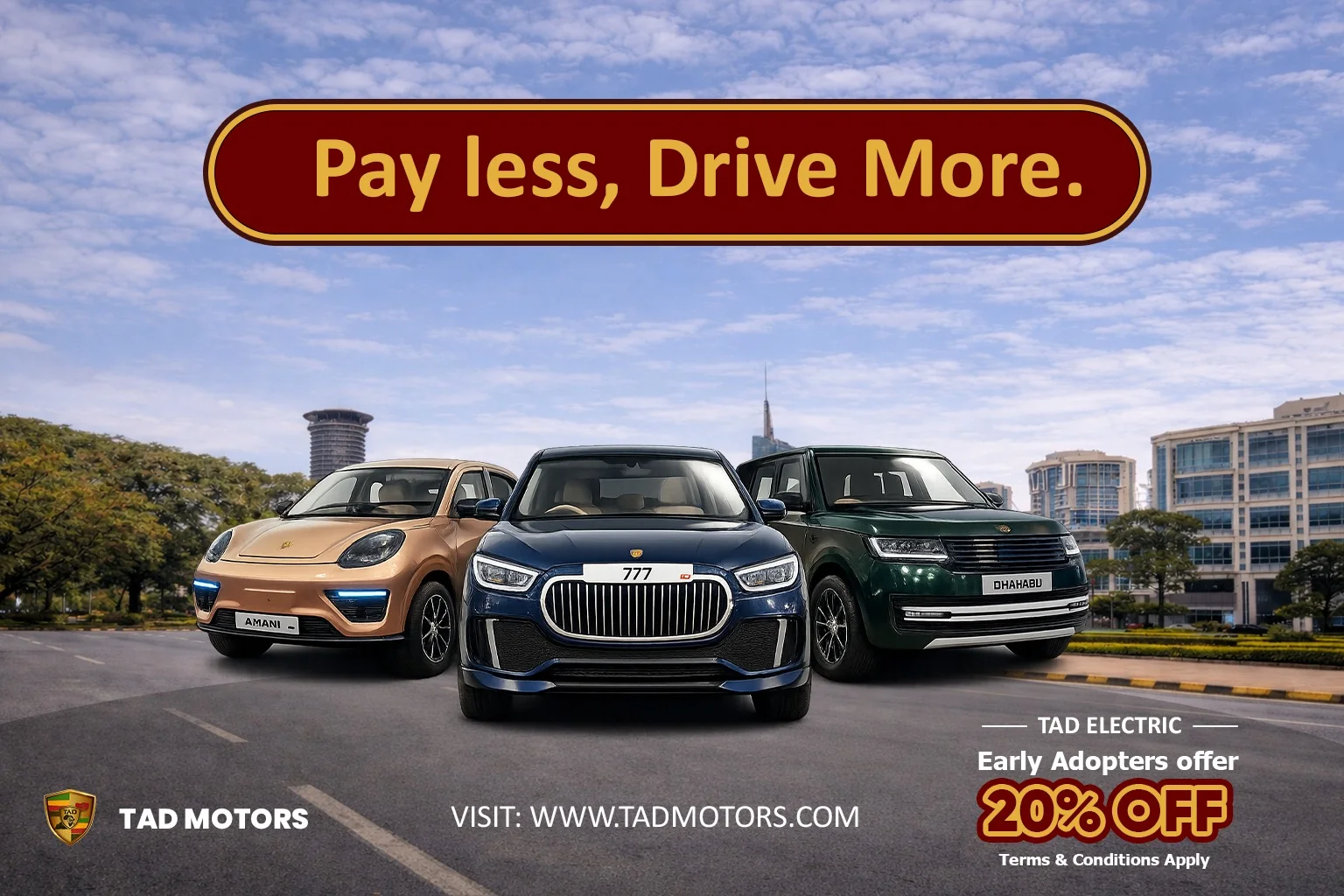
TAD Motors, operating from the Naivasha Special Economic Zone, launched five models in January 2026. Two are SUVs — the Dhahabu and Amani (KES 2 million–2.6 million). Three are sedans — the Taji, Makena, and Fahari (KES 1.3 million–1.6 million).
All five have a stated range of around 250 km and charge via a standard wall socket. There are no fast-charging options at launch. TAD’s founder, Tadesse Tessema, has said the company targets 3,000 units a year and plans to source 90 percent of components locally by end of 2026 — starting with body panels, then eventually batteries.
At KES 1.3 million, the entry sedan is priced to compete directly with used petrol imports. That is the whole point.
TAD Motors Quick Spec:
- Price range: KES 1.3M–2.6M
- Range: ~250 km
- Charging: Standard wall socket (AC only)
- Assembly: Naivasha SEZ
Dongfeng ePureCitie — Assembled in Mombasa
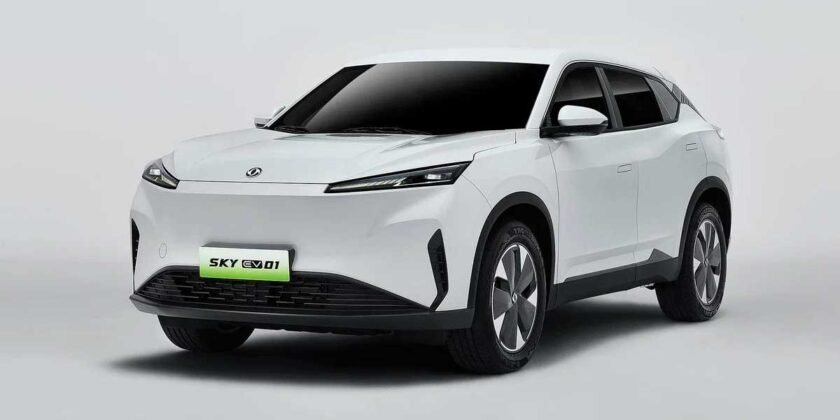 Dongfeng partnered with ePureMotion and the Associated Vehicle Assemblers (AVA) plant in Mombasa to bring the ePureCitie compact hatchback to Kenya in two trims.
The Classic (KES 4 million) delivers 330 km of range. The Lux (KES 4.5 million) extends that to 430 km and adds advanced driver assistance systems. Dongfeng is also building out a small DC fast-charging network in Nairobi — currently four public points, with more planned.
This is the best option in 2026 for buyers who want longer range, fleet use, or ADAS features at a mid-range price.
Dongfeng ePureCitie Quick Spec:
- Classic: KES 4M / 330 km range
- Lux: KES 4.5M / 430 km range
- Charging: Onboard AC + optional DC fast charger
- Assembly: AVA Mombasa
Autopax AirEv YETU — The Mid-Budget Option
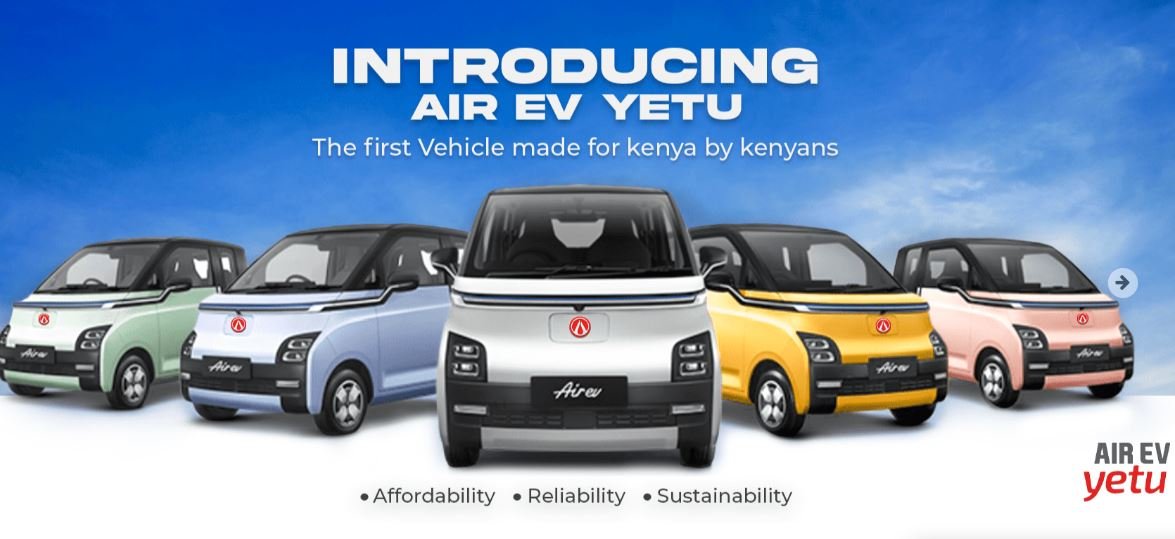
Autopax, one of Kenya’s established EV importers, added local assembly credentials through its AirEv YETU model at KES 1.7 million. Autopax CEO Joy Kalua put the running-cost case simply: driving an Autopax EV costs roughly 40 percent of what you would spend on petrol for the same distance.
Imported Models Still Available in Kenya
Not everyone will go the local assembly route. Here is the current import landscape.
| Model | Price (KES) | Range | Best For |
|---|---|---|---|
| Nissan Leaf (used, 2014–2017) | 1.2M–1.7M | 150–200 km | City driving, ride-hailing |
| Renault Zoe (used, 2015–2019) | 1.45M–2.2M | 250–300 km | Urban commuting |
| MG ZS EV (2021–2023) | 2.9M–3.5M | 320 km | Families, weekend trips |
| BYD Dolphin | 2.5M–2.8M | 340–427 km | Daily driver, tech features |
| BYD Atto 3 | 4.2M–5.5M | 350–420 km | Compact SUV buyers |
| Hyundai Kona Electric | 3.5M–4.2M | 450 km | Premium family SUV |
| Neta V | from 4.6M | 380 km | Style-conscious city buyers |
| Tesla Model 3 (used) | from 2.5M | 500–570 km | Performance, status |
| Tesla Model 3 (new) | from 5M | 570 km | Luxury commuters |
Kenya EV Tax Incentives in 2026
The government’s National E-Mobility Policy, launched in February 2026, locked in the following:
- 0% Import Duty on fully assembled EVs (petrol cars: 25–35%)
- 0% VAT on EVs (petrol cars: 16%)
- 10% Excise Duty on EVs (petrol: 20–35%)
- 0% Import Duty on locally assembled EVs (35% on fully built petrol vehicles)
Running costs are where the savings really stack up. Charging an EV in Kenya costs around KES 3.23 per kilometre. Petrol averages KES 15.83 per kilometre. That is more than 75 percent cheaper to run.
In February 2026, NCBA Bank introduced Kenya’s first EV-specific loan product at interest rates 2% lower than conventional vehicle loans.
Charging Infrastructure: Growing, But Fragmented
Kenya had around 67 public charging stations in 2023. That number passed 200 by early 2025, and the government has a target of 10,000 by 2030.
In practice, the public network is still thin. Each brand is handling charging differently:
- TAD Motors — relies entirely on standard wall sockets. No public chargers planned.
- Dongfeng — four DC fast-charge points in Nairobi, with gradual expansion.
- Rideence Africa — 16 stations currently, targeting 100 by end of 2026 (focused on commercial vans).
Most EV owners in Kenya currently charge at home overnight. For a car with a 40–60 kWh battery, a full home charge costs between KES 600 and KES 1,800, depending on battery size and your electricity tariff.
Fast chargers, where available, can reach 80 percent in 20–40 minutes.
What to Expect for the Rest of 2026
TAD Motors aims to hit commercial fleet volumes by mid-2026. Dongfeng has committed to additional passenger and light commercial EV models through the year. AVA in Mombasa is also building EV taxi and minibus capacity through its partnership with Rideence Africa, which secured a $2.46 million assembly deal in early 2026.
Local assembly is the direction the market is heading. Assemblers avoid the 35% import duty on fully built units, which gives them a real pricing edge over importers. The question is whether consumer demand catches up to production ambition fast enough.
Quick Verdict
Tightest budget (under KES 2M): TAD Motors Taji or Fahari sedan. Limited range, simple charging, but nothing else in Kenya comes close at this price.
Best value import (KES 2.5M–3.5M): BYD Dolphin or MG ZS EV. Proven batteries, usable range for most Kenyan routes.
Mid-range locally assembled: Dongfeng ePureCitie Classic at KES 4M. Better range than the Leaf, assembled locally, with ADAS on the Lux trim.
Fleet and ride-hailing: Nissan Leaf (used) for low upfront cost, or TAD Motors sedans if your routes stay under 200 km daily.
If money is not the constraint: Hyundai Kona Electric or BYD Atto 3. Both handle Kenyan road conditions well and have dealership backup.
Frequently Asked Questions
Q: What is the cheapest electric car available in Kenya in 2026?
A: The TAD Motors Taji sedan starts at KES 1.3 million — currently the lowest price for any electric car in the Kenyan market. It is locally assembled at the Naivasha Special Economic Zone.
Q: Are electric cars exempt from import duty in Kenya?
A: Yes. Fully assembled EVs attract 0% import duty and 0% VAT under Kenya’s current incentive framework. Locally assembled EVs avoid the 35% import duty charged on fully built petrol or EV imports and pay a 10% excise duty.
Q: How many public EV charging stations are there in Kenya in 2026?
A: Over 200 public charging stations were operational as of early 2026, up from 67 in 2023. The government’s target is 10,000 by 2030. Most current EV owners charge at home using standard sockets or home wallboxes.
Q: Which electric car has the longest range available in Kenya?
A: The Tesla Model 3 offers up to 570 km per charge, making it the longest-range option currently importable into Kenya. Among locally assembled options, the Dongfeng ePureCitie Lux delivers 430 km.
Q: Can I get a loan to buy an electric car in Kenya?
A: Yes. NCBA Bank launched Kenya’s first EV-specific loan product in February 2026, offering interest rates 2% lower than standard vehicle financing. Other banks are expected to follow.
Q: Is the BYD Dolphin available in Kenya?
A: Yes. The BYD Dolphin is available through local dealerships and online platforms, priced between KES 2.5 million and KES 2.8 million depending on variant and source.
Related EV News
- Plug-in Hybrid vs Full Electric Car: Which to Buy in 2026?
- EV Battery Degradation: How Much Range Will You Lose Over Time?
- BYD Cars Nigeria: Prices, Specs, and Where to Buy (2026)
- Best Chinese Electric Cars in 2026: The Complete Buyer’s Guide
- What Is a Solid State Battery and Why It Could Change EVs Forever