South Africa sold 1,018 battery-electric vehicles in all of 2025 — less than 0.2% of a record 596,818-unit car market. That number sounds discouraging. What follows is why 2026 looks different anyway.
Three things arrived at roughly the same time: the country’s first truly sub-R400,000 EV (BYD’s Dolphin Surf at R339,900), a 150% manufacturing tax incentive that kicked in on 1 March 2026, and BYD’s announcement that it will roll out 200–300 megawatt-class Flash charging stations along South African highways by end of year. None of these individually fixes the market. Together they shift the math.
BEV Sales Fell 17% in 2025 — Here’s Why That Figure Misleads
The headline is real: South Africa’s BEV passenger car sales dropped from 1,231 units in 2024 to 1,018 in 2025, a 17% year-on-year decline. But the used market told a different story. AutoTrader South Africa’s mid-year report found battery-electric used-car sales up 65% in the first half of 2025, with Volvo’s EX30 and XC40 Recharge holding the top two slots.
What that split reveals is a market in an awkward transition: new EVs are still priced beyond most buyers, but interest is real and spreading. The constraint is supply cost, not demand. That distinction matters for what comes next.
BYD’s Flash Charging Network: 400km in 5 Minutes, Nationwide by Late 2026
In October 2025, BYD executive vice president Stella Li confirmed to TechCentral that the company would build a network of 1-megawatt Flash charging stations across South Africa. Construction was set to begin at BYD dealerships in April or May 2026, then expand along national highways. Li’s target: 200 to 300 stations by end of 2026.
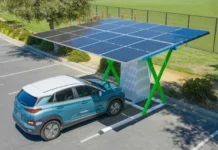
Each Flash charger runs on BYD’s 1,000-volt Super-e platform, delivering roughly 400km of range in about five minutes — a charge time comparable to a petrol fill-up. Not all sites will be solar-backed, but off-grid solar options are built into the plan for locations outside major urban centres where grid capacity is thin.
This is the largest single infrastructure commitment in South Africa’s EV history. Range anxiety — consistently cited as the top adoption barrier — becomes harder to defend once a highway fast-charge corridor exists.
150% Manufacturing Tax Incentive: What It Covers and What It Doesn’t
From 1 March 2026, automakers investing in South African EV production facilities can claim a 150% tax deduction on qualifying investments in machinery and plant. The incentive runs until 1 March 2036 and covers battery-electric, plug-in hybrid, and hydrogen vehicles.
BMW‘s Plant Rosslyn in Pretoria already assembles the fully electric iX1 for local sale and export, making it the only active EV assembly plant on the African continent. The tax incentive strengthens its case for expanding that output. Other manufacturers watching South Africa’s position as a potential alternative manufacturing hub — given rising EV tariffs in the US and EU — now have a clearer fiscal signal to act on.
What the incentive doesn’t do: fix the import duty gap. EVs entering South Africa still carry a 25% customs duty versus 18% for ICE vehicles. Industry group CHARGE has formally called on Finance Minister Enoch Godongwana to close that gap in the 2026 Budget, arguing that subsidising EV production while taxing EV buyers at a premium is contradictory policy.
Brands Active in South Africa’s EV Market in 2026
The market has spread considerably from its early BMW-and-Audi-only days. Current active brands include:
- BYD — Dolphin Surf (R339,900), Dolphin Extended (~R539,900), Sealion 7; 70 dealerships targeted by end of 2026
- Volvo — EX30 (market leader in used BEV sales), XC40 Recharge, EX90; 114 EVs sold in the first four months of 2025 alone
- BMW — iX1 (locally assembled at Plant Rosslyn), iX, i4, i5
- Audi — Q4 e-tron, Q8 e-tron; partnered with GridCars for ultrafast charging rollout
- Volkswagen, Mercedes-Benz, Hyundai, Kia, Jaguar, Nissan — models available at varying price points
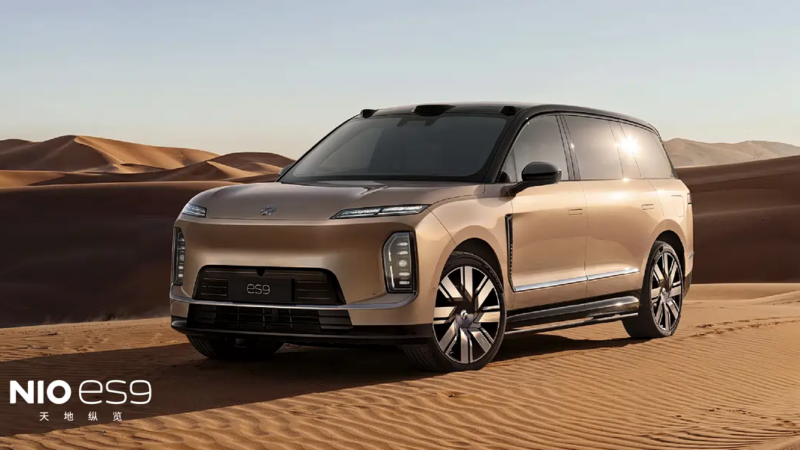
- Chinese newcomers — Geely, Dongfeng, Leapmotor, XPeng, NIO, Changan listed on local EV platforms; grey-market and official-channel availability varies by brand
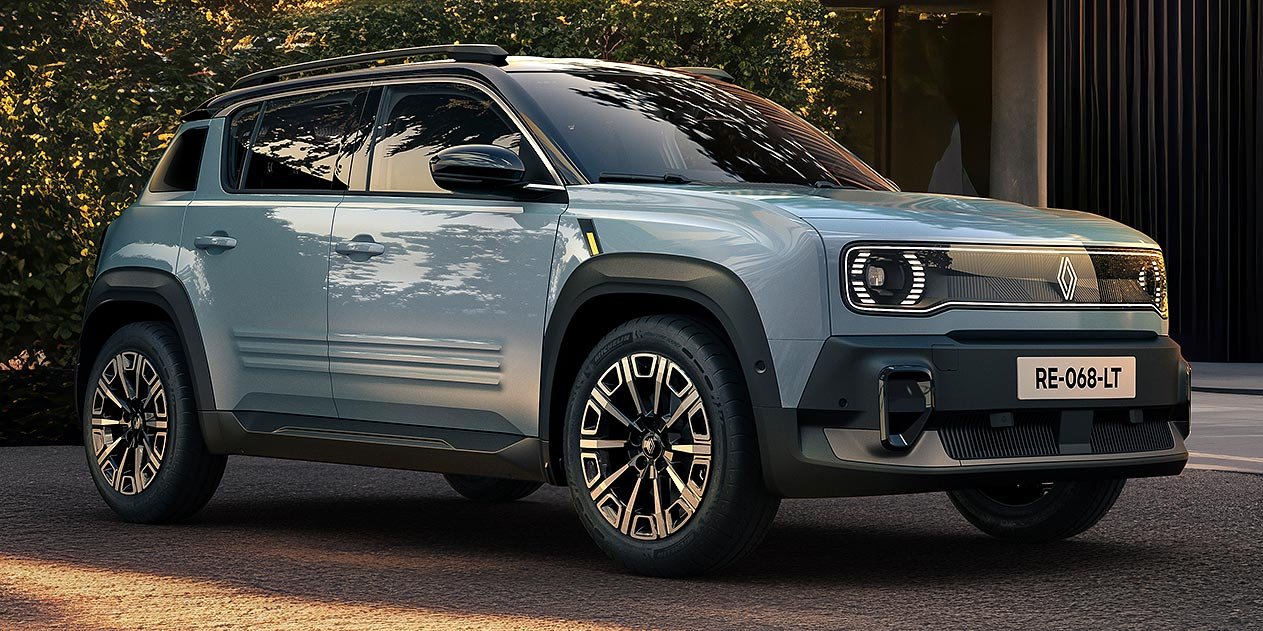
The most meaningful shift in 2026 is price compression at the entry level. Three Chinese-built models now sit under R500,000 — a threshold that makes EV ownership thinkable for a much broader slice of the market than anything available two years ago.
Charging Infrastructure: 600 Stations and Growing, But Grid Remains the Problem
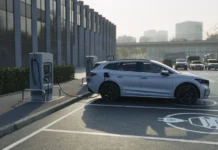
South Africa had roughly 600 public charging stations in early 2026, up from around 300 in 2022. Approximately 60% of the network is operated by GridCars. Audi South Africa built out ultrafast DC stations in partnership with GridCars; BMW has deployed over 60 ChargeNow points nationally; Zero Carbon Charge (CHARGE) runs off-grid solar-powered sites addressing rural coverage.
Cost for public DC fast charging runs R7.00–R8.24 per kWh, depending on the operator and payment method. Home charging is considerably cheaper at R3.00–R4.00 per kWh, making EVs cost roughly one-third to one-half the operating expense of petrol equivalents even on public infrastructure alone.
The unresolved issue is Eskom. Load-shedding — South Africa’s rolling blackouts — remains an existential concern for home-charging reliability. Solar-paired home installations address this partially, but they add R12,000–R25,000 to the total cost of EV ownership, which is non-trivial at the sub-R400,000 price point where buyers are most cost-sensitive.
What This Means for African EV Buyers and Investors
South Africa is the continent’s most developed EV market by infrastructure, policy, and model availability. It’s also the most instructive case study for what goes wrong when import duties, grid instability, and insufficient fiscal incentives operate simultaneously.
The 2026 developments — BYD’s charging network, the manufacturing incentive, and the first genuinely affordable new BEVs — are real inflection points. But the duty gap and load-shedding problem will determine whether those inflection points compound into mass adoption or level off at a slightly larger niche.
For buyers in Nigeria and Kenya watching South Africa: the grey-market import case for used South African EVs (particularly the Volvo EX30 and BYD Dolphin range) is becoming more viable as prices soften. The local charging infrastructure question is separate and still harder in both markets.
Frequently Asked Questions: South Africa EV Market 2026
How many electric vehicles were sold in South Africa in 2025?
1,018 new passenger battery-electric vehicles were sold in South Africa in 2025, according to NAAMSA data. This was down 17% from 1,231 units in 2024. The overall new vehicle market hit a decade-high of 596,818 units in the same year.
What is the cheapest electric car in South Africa in 2026?
The BYD Dolphin Surf is currently South Africa’s most affordable new BEV, starting at R339,900 (approximately $18,700 USD) for the Comfort trim with a 232km range. The Dynamic variant costs R389,900 and offers 295km of range.
Is BYD building charging stations in South Africa?
Yes. BYD announced it will build 200–300 megawatt-class Flash charging stations across South Africa by end of 2026. Construction at dealerships was set to begin in April or May 2026, with national highway expansion to follow. Each Flash charger can deliver approximately 400km of range in around five minutes.
What is South Africa’s EV manufacturing tax incentive?
From 1 March 2026, manufacturers investing in EV or hydrogen vehicle production in South Africa can claim a 150% tax deduction on qualifying plant and machinery investments. The incentive applies through 1 March 2036 and covers BEVs, PHEVs, and fuel-cell vehicles.
What is the EV import duty in South Africa?
Electric vehicles imported into South Africa currently carry a 25% customs duty, compared to 18% for internal combustion engine vehicles. Industry groups have called for the gap to be closed or eliminated, but as of early 2026 no change has been legislated.
How many public EV charging stations does South Africa have?
South Africa had approximately 600 public EV charging stations as of early 2026, concentrated in Gauteng, the Western Cape, and KwaZulu-Natal. Around 60% of these are operated by GridCars. BYD’s planned network of 200–300 stations would substantially increase coverage by end of 2026 if delivered on schedule.
Which EV brands are available in South Africa?
As of 2026, officially available BEV brands in South Africa include BYD, Volvo, BMW, Audi, Volkswagen, Mercedes-Benz, Hyundai, Kia, Jaguar, and Nissan. Chinese brands including Geely, Dongfeng, Leapmotor, XPeng, NIO, and Changan are also accessible through specialist platforms, with grey-market and official availability varying by brand.
Related EV News