Home Update EV Charging Stations in Nigeria: Where Can You Charge in 2026?

EV Charging Stations in Nigeria: Where Can You Charge in 2026?

Looking to charge your electric vehicle in Nigeria? Here's a city-by-city breakdown of EV charging stations in Lagos, Abuja, and beyond — plus what it costs.

EV Charging Stations in Nigeria: Where Can You Charge?

If you own an electric vehicle in Nigeria — or you’re thinking about buying one — the first practical question isn’t “which model?” It’s: where do I charge?

The honest answer is: not many places. But more than you’d expect.

As of mid-2025, Nigeria has roughly 12 EV charging and battery-swapping sites nationwide, along with five after-sales facilities. For context, the country has around 27,000 fuel stations spread across its 195,000 km road network. The gap is stark. But if you’re based in Lagos or Abuja, you do have options — and that number is growing.

EV Charging Stations in Nigeria: Where Can You Charge in 2025?

Lagos: Where Most of the Action Is

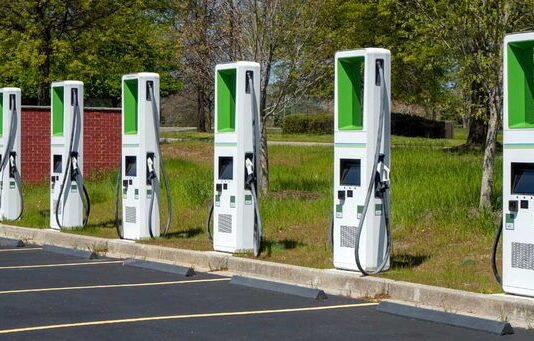
Lagos is Nigeria’s EV charging capital by a wide margin. Private operators have set up public AC and DC fast chargers across the island and mainland, mostly targeting business districts and high-traffic retail areas.

In Victoria Island, SAGLEV has installed charging points at the rooftop car park of Mega Plaza Shopping Mall. The Palms in Lekki is another location with active charging infrastructure.

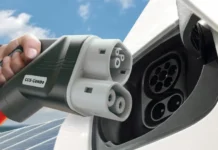
Qoray Mobility is currently the most visible commercial charging network in Lagos. Their stations dot Victoria Island and Marina, with rates starting at around ₦300/kWh for AC charging and ₦500/kWh for DC fast charging — using Type 2, CCS2, and GBT connectors. That means you need to confirm connector compatibility before you show up.

MAX, the electric mobility company, operates charging and battery-swap locations across Lekki Phase 1, Yaba, Surulere, Egbeda, and Alapere — with stations also positioned at NNPC outlets in some areas.

NADDC has also installed solar-powered EV charging stations at the University of Lagos, which serves the Yaba corridor.

For mobile charging — useful if you’re caught short — on-demand services now operate across Lagos. It’s not a long-term solution, but it exists.

Best Lagos areas for charging: Victoria Island, Lekki, Ikoyi, Ilupeju, Yaba.

Abuja: Government-Led, Still Early

Abuja is more of a testing ground than a fully operational network. The government has used it to pilot EV charging concepts, often tied to renewable energy research, with a mix of free or subsidised access.

NNPC New Energies Limited, Shafa Energy, and Nigus International launched their first EV charging deployment at an A.Y.M Shafa filling station in Abuja, with plans to expand to other outlets. The NNPC MD framed it as just the start of a broader renewables push — including solar — across both northern and southern states.

A startup called Possible EVS also opened Nigeria’s first public fast-charging station in Abuja in 2024, offering free charging for its first six months.

The Energy Commission of Nigeria also unveiled EV charging infrastructure at its headquarters in 2025, adding another public-sector option in the capital.

Abuja’s charging network is more scattered than Lagos and harder to rely on for daily use. But the policy momentum here is real.

Beyond Lagos and Abuja

Outside these two cities, charging infrastructure is nearly nonexistent. That’s the blunt truth.

NADDC has set up solar-powered pilot stations at the University of Nigeria, Nsukka, and there are reported pilot projects in Enugu and Sokoto. These are testing grounds, not commercial networks. Qoray Mobility has also been mentioned in connection with expansion plans.

Port Harcourt is starting to move. Private initiatives and announced launches point to tech-led charging stations coming online in the South-South. Nothing fully operational at scale yet, but the groundwork is being laid.

The Petrol Station Angle

One of the more interesting developments: SAGLEV has confirmed a partnership with Ardova and Enyo petrol stations, which together operate over 500 outlets across Nigeria, to equip them with EV charging points. No firm rollout timeline has been confirmed, but if it happens, it would dramatically change the landscape overnight.

Shafa Energy has also committed to deploying charging points across all A.Y.M Shafa filling stations nationwide. Nigeria’s petrol station network converting — even partially — into dual-fuel charging infrastructure would be the most practical path to mass EV adoption.

What This Means If You’re Buying an EV Now

Range anxiety is real here. With so few public charging points, most EV owners in Nigeria rely on home or workplace charging for day-to-day use.

If you’re in Lagos or Abuja, public charging is possible but requires planning — confirm connector type, check operating hours, and don’t assume a listed station is operational. If you’re outside these cities, home charging isn’t just preferable, it’s essentially your only option.

The infrastructure is building. The petrol station partnerships, the NNPC push, the Qoray expansion, the NADDC university pilots — these are all real signals. But the network isn’t there yet for long-distance EV travel across Nigeria.

Nigeria’s EV story in 2025 is largely a tale of two cities. That will change. Just not overnight.

Related EV News