- Home
- Electric Vehicles
- Compare Electric Cars
- Audi Q4 e-tron 2026 vs Volvo EX40
Audi Q4 e-tron 2026 vs Volvo EX40
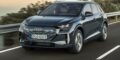
The Audi Q4 e-tron is a compact electric SUV from Germany built on Volkswagen Group’s MEB platform, targeting buyers who want a recognizable premium badge with a practical, family-sized form factor. The Volvo EX40 — formerly the XC40 Recharge — is a Swedish-designed compact EV repositioned under Volvo’s refreshed electric naming system, aimed at buyers who prioritize Scandinavian safety credentials and a cleaner interior layout over outright sportiness. Both sit in the same sub-€50,000 segment, and with Volvo pushing deeper into right-hand-drive markets and grey-market Audi Q4 units appearing in South Africa and Kenya, this comparison now has a real answer to give African buyers.
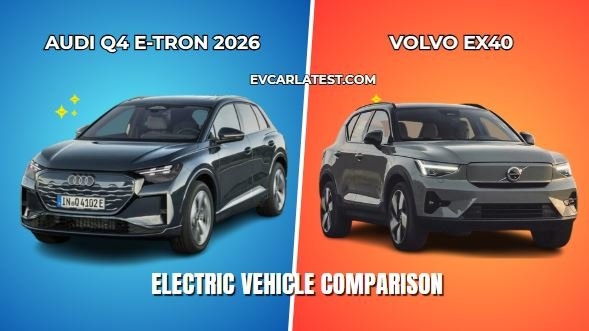
The Q4 e-tron 2026 offers WLTP-rated range of up to 590km on the long-range rear-wheel-drive variant, with the entry standard-range trim closer to 340km WLTP. Real-world estimates sit around 420–460km for the long-range version under mixed driving. DC fast charging peaks at 135kW on standard trims and up to 175kW on select configurations, with a 10–80% charge taking roughly 28–36 minutes. AC charging is 11kW standard, with 22kW available as an option. The Volvo EX40 is rated at up to 490km WLTP (single motor), with real-world figures around 380–420km in typical use. It supports 150kW DC fast charging and hits 10–80% in approximately 28 minutes. AC charging is 11kW on both variants. On paper, the Q4 e-tron has more range headroom; in practice, the gap narrows considerably.
The Audi Q4 e-tron 2026 starts at roughly €44,000 (approximately ₦73.5 million / ZAR 860,000 / KES 6.3 million at current rates) before options or import duties. The Volvo EX40 starts around €40,000 (approximately ₦66.7 million / ZAR 780,000 / KES 5.7 million). Neither model has official dealer distribution in Nigeria, but both move through grey-market channels in South Africa and Kenya. If you are deciding between these two, the core question is whether the Audi’s longer range justifies a roughly €4,000 premium — and in markets without reliable fast chargers, that extra buffer matters.
Audi’s relevant lineup alternatives include the Q6 e-tron above this segment and the Q8 e-tron for buyers with larger budgets. From Volvo’s side, the EX30 sits below at a lower price point, while the EX90 targets buyers moving up. Outside both brands, the BMW iX1 and Mercedes EQA compete directly in this space. The BMW iX1 in particular is more widely available in South Africa with official distribution, which gives it a practical advantage despite similar pricing.
The Q4 e-tron’s longer WLTP range is genuinely useful in low-infrastructure markets where the next charger is far away. Its MEB platform is mature and well-supported with over-the-air updates, which matters for long-term reliability. The interior is spacious for the segment, making it viable for families and longer intercity runs. On the downside, Audi options pricing adds up fast, and the base trim range is modest enough to feel limiting on its own. Panel quality in the lower trims has also drawn criticism in international reviews.
The EX40 benefits from Volvo’s well-earned safety reputation — its EURO NCAP and NHTSA ratings are among the best in segment — which carries real weight for buyers moving the whole family. The interior is simpler and less cluttered than the Q4’s, which some buyers prefer. Its 150kW peak DC charging rate is marginally faster than the Q4’s standard 135kW cap. The cons: the EX40 is no longer sold new in the United States, limiting its resale and parts ecosystem in some markets, and its real-world range on the lower trim is a real constraint for long highway drives.
Quick Verdict
Choose the Q4 e-tron if available range and a more configurable drivetrain matter most to you — especially if you regularly cover long intercity routes where charging stops are unpredictable. Choose the EX40 if safety ratings, a less complicated interior, and a slightly lower entry price are your priorities. Neither has full official support in West Africa, so factor grey-market import costs and after-sales access into whichever decision you make.
FAQ
Is the Audi Q4 e-tron better than the Volvo EX40 for long trips?
The Q4 e-tron has a higher WLTP ceiling — up to 590km on the long-range variant — compared to the EX40’s 490km. For routes with limited charging stops, that range buffer gives the Audi a practical edge. The EX40’s 150kW DC charging speed is slightly faster, so it recovers range quicker if a charger is available.
Which is cheaper to maintain, the Audi Q4 e-tron or the Volvo EX40?
Both are electric, so routine servicing costs are lower than petrol equivalents. Volvo’s service intervals and parts costs have historically run slightly lower than Audi’s in European markets. In Africa, the more relevant factor is local technician familiarity — neither brand has widespread EV-trained service centres in Nigeria or Ghana, so grey-import buyers carry more risk on both models.
Is the Volvo EX40 available in Nigeria or Africa?
Volvo does not have official EV distribution in Nigeria. The EX40 reaches South Africa and Kenya through grey-market imports. Buyers should account for import duties, shipping costs, and the absence of a local warranty when pricing a grey-market unit.
Which has better resale value — the Audi Q4 e-tron or Volvo EX40?
In European and UK markets, both hold value reasonably well, with the Audi badge typically commanding slightly stronger resale. In African grey markets, resale value is harder to predict and depends more on local demand than brand positioning. The Q4 e-tron’s wider global availability does give it a broader used-car market to fall back on.
Related EV Comparisons
- Audi Q4 e-tron 2026 vs Kia EV6
- Audi Q4 e-tron 2026 vs Hyundai Ioniq 5
- Audi Q4 e-tron 2026 vs BMW iX1 2026
- Audi Q4 e-tron 2026 vs Tesla Model Y 2025
- Hongqi E-HS9 vs Volvo EX90
| |
| Price | $47,000.00 $50,000.00 |
| Our Rating | |
| Brand | AUDI Volvo |
| Category | Electric Cars Electric Cars |
MODEL
| Available Trims / Variants |
Audi Q4 e-tron e-tron Audi Q4 e-tron performance Audi Q4 e-tron quattro Audi Q4 e-tron quattro performance Volvo EX40 Single Motor Volvo EX40 Single Motor Extended Range Volvo EX40 Twin Motor Volvo EX40 Twin Motor Performance |
PRICE & AVAILABILITY
| Base Price (USD) |
€ 47,500 £ 46,300 - Audi Q4 e-tron e-tron € 53,900 £ 51,000 - Audi Q4 e-tron performance € 55,900 £ 53,000 - Audi Q4 e-tron quattro € 59,000 £ 56,000 - Audi Q4 e-tron quattro performance € 50,000 £ 46,000 - Volvo EX40 Single Motor $ 53,800 € 55,500 £ 48,000 - Volvo EX40 Single Motor Extended Range $ 55,500 € 59,600 £ 57,800 - Volvo EX40 Twin Motor € 63,000 - Volvo EX40 Twin Motor Performance |
| Availability Status | Available to order. Released 2026, May Available to order. Released 2024, February |
BATTERY & CHARGING
| Battery Capacity |
59 kWh usable, 63 kWh total - Audi Q4 e-tron e-tron 77 kWh usable, 82 kWh total - Audi Q4 e-tron performance 77 kWh usable, 82 kWh total - Audi Q4 e-tron quattro 77 kWh usable, 82 kWh total - Audi Q4 e-tron quattro performance 67 kWh usable, 70 kWh total - Volvo EX40 Single Motor 79 kWh usable, 82 kWh total - Volvo EX40 Single Motor Extended Range 79 kWh usable, 82 kWh total - Volvo EX40 Twin Motor 79 kWh usable, 82 kWh total - Volvo EX40 Twin Motor Performance |
| Range (WLTP/CLTC/EPA) |
273 mi WLTP - Audi Q4 e-tron e-tron 359 mi WLTP - Audi Q4 e-tron performance 347 mi WLTP - Audi Q4 e-tron quattro 336 mi WLTP - Audi Q4 e-tron quattro performance 298 mi WLTP - Volvo EX40 Single Motor 356 mi WLTP (296 mi EPA) - Volvo EX40 Single Motor Extended Range 334 mi WLTP (260 mi EPA) - Volvo EX40 Twin Motor 333 mi WLTP - Volvo EX40 Twin Motor Performance |
| DC Charging (Max kW) |
CCS 160 kW max, 10-80% in 28 min - Audi Q4 e-tron e-tron CCS 165 kW max, 10-80% in 28 min - Audi Q4 e-tron performance CCS 165 kW max, 10-80% in 28 min - Audi Q4 e-tron quattro CCS 185 kW max, 10-80% in 27 min - Audi Q4 e-tron quattro performance CCS 175 kW max, 10-80% in 26 min - Volvo EX40 Single Motor CCS 175 kW max, 10-80% in 28 min - Volvo EX40 Single Motor Extended Range CCS 175 kW max, 10-80% in 28 min - Volvo EX40 Twin Motor CCS 175 kW max, 10-80% in 28 min - Volvo EX40 Twin Motor Performance |
| AC Charging (Max kW) |
Type 2 11 kW
Type 2 11 kW, 100% in 7 h - Volvo EX40 Single Motor Type 2 11 kW, 100% in 8 h - Volvo EX40 Single Motor Extended Range Type 2 11 kW, 100% in 8 h - Volvo EX40 Twin Motor Type 2 11 kW, 100% in 8 h - Volvo EX40 Twin Motor Performance |
| Energy Consumption |
246 Wh/mi WLTP - Audi Q4 e-tron e-tron 251 Wh/mi WLTP - Audi Q4 e-tron performance 259 Wh/mi WLTP - Audi Q4 e-tron quattro 261 Wh/mi WLTP - Audi Q4 e-tron quattro performance 275 Wh/mi WLTP - Volvo EX40 Single Motor 269 Wh/mi WLTP - Volvo EX40 Single Motor Extended Range 283 Wh/mi WLTP - Volvo EX40 Twin Motor 283 Wh/mi WLTP - Volvo EX40 Twin Motor Performance |
PERFORMANCE
| Power Output (kW / hp) |
RWD 204 hp (150 kW) - Audi Q4 e-tron e-tron RWD 286 hp (210 kW) - Audi Q4 e-tron performance AWD 300 hp (220 kW) - Audi Q4 e-tron quattro AWD 340 hp (250 kW) - Audi Q4 e-tron quattro performance RWD 238 hp (175 kW) - Volvo EX40 Single Motor RWD 248 hp (185 kW) - Volvo EX40 Single Motor Extended Range AWD 402 hp (300 kW) - Volvo EX40 Twin Motor AWD 442 hp (325 kW) - Volvo EX40 Twin Motor Performance |
| 0–100 km/h / 0-60 mph (seconds) The acceleration numbers are an easy way to compare car performance. We list either time from 0 to 100 km/h or time from 0 to 60mph, depending on which number(s) the manufacturers provide. The lower the acceleration time, the higher performance the car is. |
8.1 sec 0-62 mph - Audi Q4 e-tron e-tron 6.6 sec 0-62 mph - Audi Q4 e-tron performance 6.2 sec 0-62 mph - Audi Q4 e-tron quattro 5.4 sec 0-62 mph - Audi Q4 e-tron quattro performance 7.3 sec 0-62 mph - Volvo EX40 Single Motor 6.9 sec 0-60 mph (7.3 sec 0-62 mph) - Volvo EX40 Single Motor Extended Range 4.6 sec 0-60 mph (4.8 sec 0-62 mph) - Volvo EX40 Twin Motor 4.6 sec 0-62 mph - Volvo EX40 Twin Motor Performance |
| Torque (Nm) |
350 Nm (258 lb-ft) - Audi Q4 e-tron e-tron 545 Nm (402 lb-ft) - Audi Q4 e-tron performance 545 Nm (402 lb-ft) - Audi Q4 e-tron quattro 679 Nm (501 lb-ft) - Audi Q4 e-tron quattro performance 310 lb-ft (420 Nm) - Volvo EX40 Single Motor 420 Nm (310 lb-ft) - Volvo EX40 Single Motor Extended Range 670 Nm (494 lb-ft) - Volvo EX40 Twin Motor 670 Nm (494 lb-ft) - Volvo EX40 Twin Motor Performance |
| Top Speed (km/h / mph) |
99 mph (160 km/h) - Audi Q4 e-tron e-tron 112 mph (180 km/h) - Audi Q4 e-tron performance 112 mph (180 km/h) - Audi Q4 e-tron quattro 112 mph (180 km/h) - Audi Q4 e-tron quattro performance 112 mph (180 km/h) |
BODY & DIMENSIONS
| Dimensions (L×W×H mm) | 4588 x 1865 x 1632 mm (180.6 x 73.4 x 64.3 in) 174.8 x 73.7 x 64.8 in (4440 x 1873 x 1647 mm) |
| Trunk/Boot Capacity (L) | EU: 515 l, 1487 l max EU: 410 l, 1295 l max |
| Body Style | 5 door SUV, 5 seats 5 door SUV, 5 seats |
| Kerb Weight (kg) |
EU: 2040 kg unladen, 2470 kg gross - Volvo EX40 Single Motor EU: 2075 kg unladen, 2520 kg gross - Volvo EX40 Single Motor Extended Range EU: 2170 kg unladen, 2650 kg gross - Volvo EX40 Twin Motor EU: 2170 kg unladen, 2650 kg gross - Volvo EX40 Twin Motor Performance |
| Frunk/Bonnet Capacity (L) | No 31 l |
SAFETY & DRIVER ASSISTANCE
COMFORT & SEATING
| Seating Capacity | Heated front seats Heated and ventilated front seats, heated rear seats |
DISPLAYS & CONNECTIVITY
| Centre Screen (inches) | 12.8" Full HD touchscreen 9" touchscreen |
| Driver's Display (inches) | 11.9" 12.3" |
| Head-Up Display (HUD) | Yes, with augmented reality No |
TECHNOLOGY
ADDITIONAL SPECS
Note

|
Disclaimer Note
Specifications sourced from manufacturer data and may reflect WLTP, CLTC, or EPA test conditions. Import prices in your local are estimates based on grey-market landing costs and exclude duties, clearing fees, and local taxes. Figures are subject to change without notice. Always verify with your local importer before purchase. We can not guarantee that the information on this page is 100% correct