1. Home
  2. Electric Vehicles
  3. Compare
  4. Tesla Model Y L vs BYD Tang L EV

Tesla Model Y L vs BYD Tang L EV

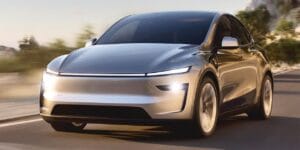
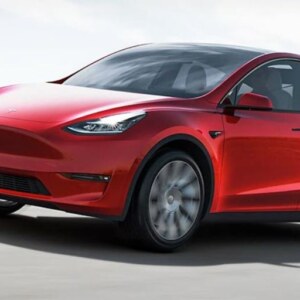
The Tesla Model Y L and BYD Tang L EV are both large electric SUVs targeting buyers who want more than five seats without stepping into full-size territory. The Model Y L is Tesla’s long-wheelbase six-seater, built in Shanghai and launched in mid-2025 for the Chinese market before reaching Australia and New Zealand in early 2026. The Tang L EV is BYD’s Dynasty flagship — a seven-seat, performance-oriented SUV that arrived in April 2025. Both are relevant right now as African buyers increasingly consider Chinese-market EVs through grey-market import channels.

Range & Charging

The Model Y L is rated at 751 km on the CLTC cycle, with the WLTP-certified figure for Australia and New Zealand sitting at 681 km. Real-world range is estimated at 520–580 km under mixed driving conditions. It supports DC fast charging up to 250 kW via Tesla’s Supercharger network, with a 10–80% charge taking approximately 30 minutes.

The Tang L EV carries a 100.5 kWh LFP battery and is rated at 670 km CLTC for the rear-wheel-drive variant and 600 km for the AWD version. Real-world estimates average 450–550 km. BYD’s ultra-fast 1,000 kW flash charging is currently limited to China; outside China, standard CCS DC speeds apply, putting a 10–80% session closer to 35–45 minutes in most markets.

Price, Availability & Market Fit

The Tang L EV starts at approximately $32,240 (RWD Premium) and tops out at $39,410 (AWD Flagship) in China. That is roughly ₦50M–₦61M at current grey-market import rates in Nigeria. The Model Y L has not been officially priced for African markets; grey-market estimates put it above ₦75M–₦90M depending on trim and origin. Neither vehicle has official dealership availability in Nigeria, Kenya, or most of West Africa — both arrive as personal or commercial imports. This comparison helps buyers decide whether the Tang L’s lower entry price and seven-seat layout outweigh the Model Y L’s stronger charging infrastructure and brand recognition in resale markets.

Ecosystem & Rival Context

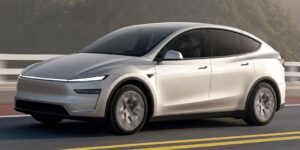
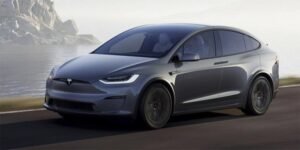
Tesla buyers in this segment should also consider the standard Model Y Premium and, for larger budgets, the Model X. BYD buyers have the Seal U, Han, and the upcoming Sealion 8 (which is the Tang L badged for some export markets) as alternatives within the Dynasty and Ocean families. Outside both brands, the Zeekr 9X and NIO ES8 compete directly in the large electric SUV space at comparable price points. The Tang L vs Model Y L matchup still stands out because it directly pits the world’s best-selling EV brand against China’s most aggressive EV challenger in a segment with very few genuine alternatives at this price.

Pros & Cons

The Model Y L benefits from Tesla’s proven Supercharger network, which matters on long-distance routes where charging reliability is non-negotiable. Its six-seat configuration with captain’s chairs in the second row offers more personal space than bench alternatives. The Autopilot driver-assistance system remains among the most mature in class. On the downside, the Model Y L’s pricing in grey-market contexts makes it significantly more expensive to acquire, and parts availability in Nigeria or East Africa is limited compared to BYD’s growing dealer footprint.

The Tang L EV’s 100.5 kWh LFP Blade Battery resists degradation in hot climates, which is a genuine advantage for African road use. The seven-seat layout includes both six and seven-seat configurations, with an interior featuring a 15.6-inch rotating central screen and DiPilot 300 driver assistance with LiDAR on top trims. Its lower China exit price makes it more accessible through import channels. The drawbacks: BYD’s flash charging advantage disappears outside China, and the Tang L’s sheer size — over five metres long — can be impractical on urban Nigerian or Kenyan roads.

Quick Verdict

Choose the Tesla Model Y L if Supercharger access, brand resale value, and a refined six-seat layout are your priorities. Choose the BYD Tang L EV if you need seven seats, a larger battery, and a lower acquisition cost through grey-market import. Neither vehicle has official after-sales support across most of Africa, so your choice should factor in which brand has better parts sourcing in your city. The Tang L wins on paper value; the Model Y L wins on infrastructure trust.

FAQ

Is the Tesla Model Y L available in Nigeria or Africa?

As of mid-2026, the Model Y L has only launched officially in China, Australia, and New Zealand. In Nigeria and most African markets, it is available only through grey-market personal or commercial importation, which affects warranty coverage and parts access.

What does the “L” mean in Tesla Model Y L?

In this case, “L” stands for long-wheelbase — it is a stretched version of the standard Model Y with a larger battery, a longer cabin, and a six-seat configuration. It is different from the Long Range trim designation used on standard Model Y variants.

How does the BYD Tang L charge outside China?

The Tang L’s headline 1,000 kW flash charging is only available at BYD’s proprietary charging stations in China. In markets using CCS or CHAdeMO infrastructure — including South Africa and Kenya — DC fast charging speeds will be considerably lower, typically in the 80–130 kW range depending on the charger available.

Which is better for African road conditions — Tang L or Model Y L?

The Tang L’s LFP battery handles heat better and its higher ground clearance suits rougher roads. However, the Model Y L’s lighter kerb weight and more compact footprint (relative to the Tang L’s 5-metre length) may make it more manageable in dense urban traffic.

 
  Tesla Model Y L BYD Tang L EV
Price $57,000.00 $33,000.00
Our Rating 6.0 6.0
Brand TESLA BYD
Category Cars Cars

MODEL

Models Tesla Model Y L Premium BYD Tang L EV RWD
BYD Tang L EV AWD

LAUNCH

Announced 2026, February January 2025
Status Available to order. Released 2026, May Production (launched April 2025)
Country of origin United States China
Base Price $ 57,000 € 49,800 $33,360 - BYD Tang L EV RWD
$40,400 - BYD Tang L EV AWD

PERFORMANCE

Power AWD 514 hp (378 kW) 500 kW (~671 hp) - BYD Tang L EV RWD
810 kW (~1,086 hp) - BYD Tang L EV AWD
Torque 493 Nm (364 lb-ft) 420 Nm torque - BYD Tang L EV RWD
860 Nm torque - BYD Tang L EV AWD
Acceleration The acceleration numbers are an easy way to compare car performance. We list either time from 0 to 100 km/h or time from 0 to 60mph, depending on which number(s) the manufacturers provide. The lower the acceleration time, the higher performance the car is. 5 sec 0-62 mph 6.9 seconds - BYD Tang L EV RWD
3.9 seconds - BYD Tang L EV AWD
Max Speed 125 mph (201 km/h) 240 km/h - BYD Tang L EV RWD
265 km/h - BYD Tang L EV AWD
transmission Single-speed

BATTERY

Capacity 82 kWh total 100.5 kWh (LFP Blade Battery)
Tech Liquid-cooled Li-ion LFP (357 V) 1000V high-voltage
Range 423 mi WLTP (CLTC) 670 km - BYD Tang L EV RWD
(CLTC) 600 km - BYD Tang L EV AWD
Consumption 17.4 kWh/100 km - BYD Tang L EV RWD
19.1 kWh/100 km - BYD Tang L EV AWD
Recuperation 2 levels, via driving modes, no regen when pedal braking Yes
Heat Pump
AC Charging Type 2 11 kW 14.4 hours (typical home AC)
DC Charging Supercharger 225 kW max
30–80% in ~6 minutes (on 1000 kW chargers)
Others Vehicle to load charging (V2L) Supports ultra-fast “flash charging”

BODY

Type 5 door, SUV, 6 seats 5-door, 7-seat electric SUV
Platform BYD Super e-Platform (1000V)
Dimensions 4969 x 1982 x 1668 mm (195.6 x 78.0 x 65.7 in) (L×W×H): 5040 × 1996 × 1760 mm
Wheelbase 3040 mm (119.7 in) 2950 mm
Clearance 169 mm (6.7 in)
Weight EU: 2088 kg unladen 2,675 kg curb weight - BYD Tang L EV RWD
2,882 kg curb weight - BYD Tang L EV AWD
Suspension Double-wishbone front, multi-link rear, electronic continuously variable damping Front: Double-wishbone
Rear: Multi-link
Wheels R19 Up to 21-inch (265/45 R21)
Trunk/Boot US: 2095 l Seats up: 675 L
Seats folded: 1960 L
Frunk/Bonnet 117 l 136 L
Towing Yes
Others “Loong Face” styling, hidden door handles

DISPLAYS

Centre 15.4" touchscreen 15.6" rotating touchscreen
Driver's Display No Full digital instrument cluster
Head-Up No AR-HUD
Others 8" rear passengers touchscreen display Ambient lighting
Premium audio
Dual wireless chargers
Bamboo wood interior trim
Optional interior fridge (depending on trim)

COMFORT

Seats Heated and ventilated/cooled front seats, power recline heated rear seats, heated third row seats 7 seats (2+3+2)
Roof All-glass roof Panoramic sunroof
Parking Aids Front, side, rear cameras, Parking Assist 360° parking, sensors, AI assistance
Connectivity BYD DiLink intelligent cockpit
Others Electric-powered frunk, hands-free trunk Fragrance system, hidden AC vents

SAFETY

Airbags 8 airbags: front, side, rear, head airbag system, front seats knee airbags Full set, reinforced steel safety cage
Driving Aids Front facing camera in the bumper, Blind Spot Monitoring, Automatic Emergency Braking, Dynamic Brake Lights, Lane Assist, Collision Avoidance Assist, Speed Assist, Lane Departure Avoidance, Traffic Light and Stop Sign Control DiPilot 300 ADAS (with LiDAR on high trims)
Self Driving Autopilot with full Self-Driving capability Assisted driving, not autonomous

Note

Others Uses BYD’s newest 1000V platform
Focuses on power + luxury + fast charging
Some features vary by trim/market
  Tesla Model Y L BYD Tang L EV

Disclaimer Note

We can not guarantee that the information on this page is 100% correct

EV BrandsView All

Show More Brands

Electric Vehicles Filter

Recent EV News

Fastest Electric Cars in the World 2026: Top 10 Ranked

The fastest electric cars in the world have crossed a threshold that combustion engineers spent decades chasing. In 2026, a Croatian hypercar holds more...

Recent EV Updates

Audi EV Comparisons 2026

Audi EV Comparisons 2026: Every Model Tested Against the Competition

Audi's electric lineup has never been more competitive — or more confusing. With four distinct e-tron families now on sale globally, the bigger question...