- Home
- Electric Vehicles
- Compare Electric Cars
- MG MG4 2026 vs Nissan Leaf 2025
MG MG4 2026 vs Nissan Leaf 2025
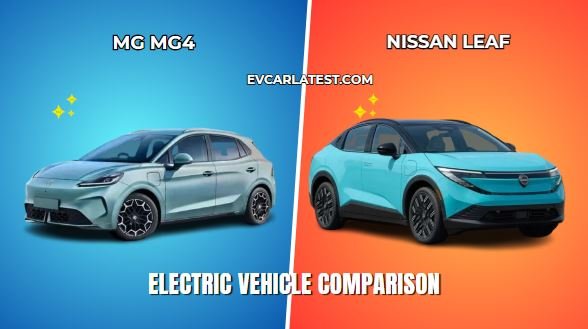
The MG MG4 and Nissan Leaf are both compact five-door electric hatchbacks, but they represent very different eras of EV development. The MG4 is a purpose-built EV from Chinese manufacturer SAIC, launched in 2022 and facelifted for 2026 with a new interior, larger batteries, and faster charging — aimed at value-focused buyers in Europe and South Africa who want modern specs without a premium price. The 2025 Nissan Leaf is the final model year of a generation that debuted in 2018, targeting first-time EV buyers in the US and Japan who prioritise low purchase price and simplicity over range or charging speed. This comparison is relevant right now because dealerships are discounting the 2025 Leaf ahead of the all-new 2026 Leaf crossover launch, making it a tempting entry-level buy — but one that warrants direct comparison against a more modern rival.
Range & Charging
The 2026 MG4 Premium Long Range delivers 280 miles (451 km) WLTP on its 64 kWh LFP battery, rising to 338 miles (544 km) WLTP with the 77 kWh Extended Range pack. Real-world range runs 230–290 miles in mixed conditions. DC fast charging peaks at 154 kW on the Long Range, enabling 10–80% in approximately 25 minutes; AC charging is 11 kW across all variants.
The 2025 Nissan Leaf offers EPA-estimated ranges of 149 miles on the base 40 kWh S trim and 212 miles on the 62 kWh SV Plus. Real-world figures are typically close to the EPA estimates. DC fast charging uses the CHAdeMO standard, with 10–80% taking approximately 40 minutes; Level 2 AC charging takes around 11.5 hours to a full charge. The CHAdeMO connector is increasingly rare at public charging stations, which adds a practical inconvenience for regular fast charging.
Price, Availability & Market Fit
The 2025 Nissan Leaf starts at approximately $28,000 in the US for the base S trim, with the SV Plus sitting around $36,000. The 2026 MG4 Premium Long Range starts at £29,995 in the UK. MG has official dealer presence in South Africa, while used Japanese-import Leafs are widely available across Kenya, Nigeria, and East Africa through informal channels — often at lower cost but without warranty. This comparison helps buyers decide whether the Leaf’s lower entry price and familiarity justify its older tech, or whether the MG4’s superior range and faster charging make it the more practical long-term purchase.
Ecosystem & Rival Context
MG buyers should also consider the MG ZS EV for an SUV body style and the MG4 Urban as a cheaper entry point. Nissan buyers have the Ariya as the modern, larger alternative — and the all-new 2026 Leaf crossover is worth waiting for if budget allows. Outside both brands, the BYD Dolphin and Renault 5 E-Tech compete directly in the affordable compact EV space. The MG4 versus Leaf matchup is more useful than those alternatives because it directly addresses whether a discounted outgoing model makes more sense than a newer, better-equipped rival at a similar price.
Pros & Cons
The MG4’s 154 kW DC charging means road trips are practical — a near-empty battery can be recovered in under 30 minutes, which the Leaf cannot match at any trim. Its LFP battery in the Long Range variant handles heat and repeated fast charging better over time, which matters for longevity in warm climates like South Africa or Nigeria. Official South African dealer presence means servicing and parts are straightforward, unlike most grey-market imports. On the downside, MG’s brand resale value outside South Africa and Europe is still limited, and the MG4 is not officially sold in the US market.
The 2025 Nissan Leaf’s low starting price makes it one of the most affordable entry points into new EV ownership, particularly in the US where the full $7,500 federal tax credit can apply. Its proven reliability track record over fifteen years gives buyers confidence in long-term ownership, and used import availability across East Africa makes it accessible to a wider range of buyers. The cons are significant, however: the CHAdeMO fast-charging connector is near-obsolete, complicating public charging, and both range figures are well below the MG4’s in an era where 250 miles is considered the practical minimum for a primary vehicle.
Quick Verdict
Choose the MG4 2026 if range, fast charging compatibility, and long-term battery durability are your main priorities. Choose the 2025 Nissan Leaf if your daily driving is short, you need the lowest possible new EV purchase price, and you have reliable home charging. The Leaf makes sense as a discounted run-out deal for urban-only use; the MG4 is the stronger all-round buy for anyone who occasionally drives longer distances. In South Africa, the MG4 is the clear choice for buyers who want official dealer support.
FAQ
Is the Nissan Leaf available in South Africa or Nigeria?
The Nissan Leaf is not officially sold new in South Africa or Nigeria. Used Japanese-import Leafs are widely available across East and West Africa through grey-market dealers, but they come without local warranty support and with the complication of sourcing CHAdeMO chargers.
Will there be a new Nissan Leaf after 2025?
Yes — the all-new third-generation Leaf debuted in June 2025 as a subcompact crossover SUV with up to 303 miles of EPA range, 150 kW DC charging, and NACS compatibility for access to Tesla’s Supercharger network. It is a significantly different vehicle from the outgoing hatchback.
Does the MG4 have CHAdeMO charging?
No — the MG4 uses CCS (Combined Charging System) for DC fast charging, which is the current global standard for fast charging infrastructure. CCS is far more widely available than CHAdeMO, giving the MG4 a practical advantage in most markets over the Leaf’s ageing charge port standard.
Which is better for first-time EV buyers — the MG4 or the Nissan Leaf?
Both are accessible options, but for different reasons. The Leaf’s lower price and simple driving experience suit buyers doing short urban commutes with home charging. The MG4 costs more to start but offers meaningfully better range, faster public charging, and a more modern feature set — making it the stronger choice for buyers who plan to use the car as their only vehicle.
Related EV Comparisons
- MG MG4 EV vs Cupra Born
- MG MG4 2026 vs Volkswagen ID.3 2026
- Hongqi Tiangong 05 (EH5) vs MG MG4 2026
- Roewe D6 vs MG MG4 2026
- Nissan Ariya vs Toyota bZ4X Touring


| |
| Price | $30,000.00 |
| Our Rating | |
| Brand | MG Nissan |
| Category | Electric Cars Electric Cars |
MODEL
| Available Trims / Variants |
Standard Range Long Range XPower performance Nissan Leaf 52kWh Nissan Leaf 75kWh |
PRICE & AVAILABILITY
| Base Price (USD) | $30,000 |
| Availability Status | Production Coming soon. Expected release 2025 |
BATTERY & CHARGING
| Battery Capacity |
51 kWh 64 kWh 77 kWh 52.9 kWh total - Nissan Leaf 52kWh 75.1 kWh total - Nissan Leaf 75kWh |
| Range (WLTP/CLTC/EPA) |
About 218 mi Standard About 281 mi Long Range About 323 mi Extended 373 mi WLTP (303 mi EPA) - Nissan Leaf 75kWh |
| DC Charging (Max kW) |
Up to about 135 kW DC 10 to 80 percent about 30 to 35 min CCS, 10-80% in 35 min - Nissan Leaf 52kWh CCS 150 kW (max), 10-80% in 35 min - Nissan Leaf 75kWh NACS (USA only) |
| AC Charging (Max kW) |
7 kW to 11 kW AC Full charge about 6 to 8 h Type 2 Type 1 (USA only) |
| Energy Consumption | 15 to 17 kWh per 100 km |
PERFORMANCE
| Power Output (kW / hp) |
168 HP RWD Standard 201 HP RWD Long Range 429 HP AWD XPower FWD 177 hp (130 kW) - Nissan Leaf 52kWh FWD 214 hp (160 kW) - Nissan Leaf 75kWh |
| 0–100 km/h / 0-60 mph (seconds) The acceleration numbers are an easy way to compare car performance. We list either time from 0 to 100 km/h or time from 0 to 60mph, depending on which number(s) the manufacturers provide. The lower the acceleration time, the higher performance the car is. |
0 to 62 mph about 7.7 s Standard 0 to 62 mph about 7.0 s Long Range 0 to 62 mph about 3.8 s XPower |
| Torque (Nm) |
184 lb ft Standard 184 lb ft Long Range 443 lb ft XPower 254 lb-ft (345 Nm) - Nissan Leaf 52kWh 355 Nm (261 lb-ft) - Nissan Leaf 75kWh |
| Top Speed (km/h / mph) |
About 100 mph Standard About 112 mph XPower 99 mph (160 km/h) |
BODY & DIMENSIONS
| Dimensions (L×W×H mm) |
Length about 168.7 in Width about 72.8 in Height about 59.1 in 171.3 x 71.3 x 61.0 in (4350 x 1810 x 1550 mm) |
| Trunk/Boot Capacity (L) | 12.9 cu ft US: 14.8 ft³ (EU: 15.4 ft³) |
| Body Style | 5 door hatchback, 5 seats 5 door hatchback, 5 seats |
| Kerb Weight (kg) |
3,600 to 4,000 lb depending on battery
EU: 1794 kg unladen - Nissan Leaf 52kWh EU: 1982 kg unladen - Nissan Leaf 75kWh |
| Ground Clearance (mm) | 5.9 in |
| Frunk/Bonnet Capacity (L) | No |
SAFETY & DRIVER ASSISTANCE
| Autonomous Driving Level | Level 2 driver assist |
| Crash Test Ratings | 5 star rating in Euro NCAP testing |
COMFORT & SEATING
| Seating Capacity |
Fabric or synthetic leather
Heated front seats, heated outer rear seats |
DISPLAYS & CONNECTIVITY
| Centre Screen (inches) | 10.25 inch touchscreen 12.3" or 14.3" touchscreen |
| Driver's Display (inches) | 7 inch digital cluster 12.3" or 14.3" |
| Head-Up Display (HUD) | No |
TECHNOLOGY
ADDITIONAL SPECS
Note
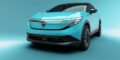
| Additional Notes | XPower version uses dual motor AWD performance setup. Nissan Leaf (third-generation) |

|
Disclaimer Note
Specifications sourced from manufacturer data and may reflect WLTP, CLTC, or EPA test conditions. Import prices in your local are estimates based on grey-market landing costs and exclude duties, clearing fees, and local taxes. Figures are subject to change without notice. Always verify with your local importer before purchase. We can not guarantee that the information on this page is 100% correct