China has two automotive giants fighting for the same crown, and the gap between them has never been smaller.
For the first two consecutive months of 2026, Geely outsold BYD — the first time that’s happened since 2022. That’s not a fluke. It’s the result of years of quiet product work finally paying off. But does Geely’s recent sales momentum make it the better brand? Or is BYD still the smarter buy?
It depends on what you’re looking for. Here’s how they actually stack up.
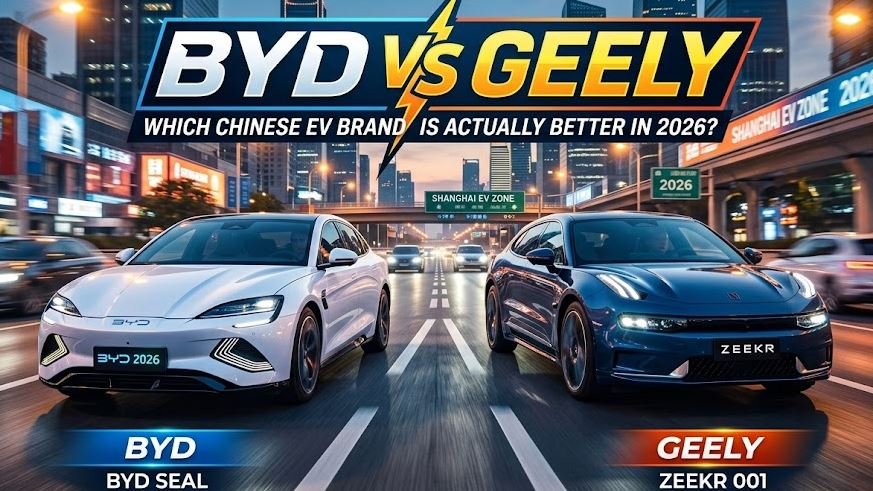
BYD vs Geely: A Quick Overview
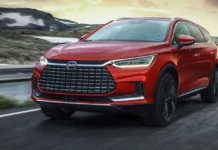
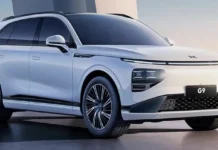
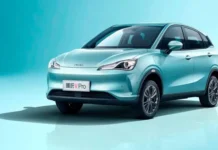
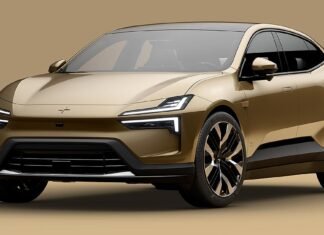
BYD (Build Your Dreams) has spent the last decade building a fully vertically integrated EV machine — batteries, motors, software, and semiconductors all developed in-house. Geely, on the other hand, plays a different game. It owns Volvo, Lotus, Polestar, Zeekr, and Lynk & Co, giving it a spread across price segments that BYD simply doesn’t match.
BYD sells only new energy vehicles, while Geely still produces ICE cars — and its gas-powered models are selling well too. That distinction matters when you’re comparing their EV-specific ambitions.
Sales: Geely Is Making a Move
Geely reported full-year 2025 sales of 3.02 million units, a 39% year-on-year increase. Its NEV segment grew 90% year-on-year to 1.69 million units, setting a new record.
BYD’s sales in the first two months of 2026 dropped 35.8% year-on-year to 400,241 units, partly due to the partial withdrawal of a tax break. Geely delivered 476,327 units in the same period — a 1% gain.
That said, BYD’s volume is still massive at the full-year level. BYD’s sales target for 2026 is reportedly 5 million vehicles, with a significant portion coming from exports. The scale is different. Geely is gaining fast, but BYD isn’t standing still.
Technology: Who Has the Edge?
This is where things get interesting.
BYD standardizes its “Sky Eye” ADAS system with highway and urban navigation-on-autopilot (NOA) across its lineup, while Geely focuses on L2 assistance with advanced features available as optional upgrades. If you want more capable driver assistance without paying extra, BYD currently has the upper hand.
On batteries and charging, BYD set benchmarks in charging power and system integration, including a megawatt charging solution for EVs. That’s a meaningful edge for long-distance drivers.
But Geely wins the innovation ranking. The Centre of Automotive Management (CAM) ranked the Geely Group — including Volvo, Polestar, and Zeekr — first among all global automakers for EV innovation, scoring 193 index points based on 72 recorded innovations. BYD ranked third at 147 points.
The Geely Group’s advantage comes from having multiple premium brands pushing cutting-edge features that eventually trickle down. BYD’s advantage is standardizing those features across affordable, high-volume models.
Value for Money: BYD Seagull vs Geely Xingyuan
Nothing captures this rivalry better than the budget segment.
The 2026 Geely Xingyuan starts at around $9,700 and offers rear-wheel drive, independent rear suspension, a 14.1-inch infotainment display, and a combined 445-liter cargo capacity — specs that outclass rivals at the same price.
Geely sold over 459,000 units of the Xingyuan in 2025, making it China’s best-selling battery EV that year. BYD’s Seagull, the previous year’s leader, dropped to fourth place after a 31% sales decline.
That said, BYD’s DM-i hybrid technology still offers more consistent real-world fuel consumption — the Seal 06 returned 3.15L/100km in user tests versus 3.8L for Geely’s comparable Galaxy L6. If efficiency is your top priority, BYD’s PHEV lineup still deserves serious consideration.
Brand Portfolio: Geely Wins on Range
BYD sells under its own name, with sub-brands like Denza, Yangwang, and Fang Cheng Bao handling the luxury and off-road segments. It’s a focused, recognizable lineup.
Geely’s portfolio is broader and more fragmented — but that’s also its strength. Zeekr targets premium buyers, Lynk & Co goes after the lifestyle segment, Galaxy handles the mainstream NEV market, and Volvo handles international premium positioning.
Geely plans to accelerate the European rollout of Lynk & Co models and has scheduled the Zeekr 7X for South Korea in the first half of 2026, while also deploying over 50,000 megawatt fast-charging stations over the next five years.
For buyers outside China, Geely’s global footprint may actually be the more accessible option.
Speed of Development: Both Are Moving Fast
Chinese EV firms typically bring a new car to market in around 20 months — about half the time it takes legacy Chinese manufacturers and a fraction of the 40-plus months typical for Western brands.
Between November 2024 and October 2025, BYD received regulatory approval for 38 new passenger car models in China, while Geely rolled out five fresh hybrids in the second half of 2025 alone.
BYD is iterating faster on the product side. Geely is iterating faster on the brand and segment side. Both strategies are working.
BYD vs Geely: Which Should You Choose?
There’s no clean winner here — it really comes down to what you need.
Choose BYD if:
- You want standardized ADAS features without paying more
- You’re buying a PHEV and real-world fuel economy matters
- You want a simple, focused brand identity with proven scale
- Fast charging infrastructure is a priority
Choose Geely (or one of its sub-brands) if:
- You want more design variety across price segments
- Premium features at a mid-range price is your goal
- You’re buying in Europe or Southeast Asia where Lynk & Co and Zeekr have distribution
- You value brand cachet (Volvo engineering DNA, Lotus performance DNA)
What’s clear is that the gap between these two brands has tightened considerably. Geely’s 2025 surge caught a lot of people off guard — including, arguably, BYD. The next 18 months will be worth watching.
Related EV News
- Cheapest Electric Cars You Can Buy in 2026 (Under $15,000)
- EV Charging Stations in Nigeria: Where Can You Charge in 2026?
- Nigeria Scraps Import Duty on Electric Vehicles, Cuts Car Tariffs Amid Oil Crisis
- Roam Air Electric Motorcycle Sets Unofficial World Record on Solar-Powered 6,200km Africa Ride
- Electric Minibus Taxis Are Coming to Cape Town in 2026 — Here’s What the Data Shows