Nigeria’s electric motorcycle market is moving fast — and for good reason. Fuel prices have more than doubled since 2023, okada riders in Lagos are watching their margins shrink every week, and a handful of brands are now building bikes specifically for Nigerian road conditions. This post breaks down the best electric motorcycles you can actually buy or order in Nigeria right now, with a hard look at what works in Lagos versus Abuja.
Why Electric Motorcycles Make Sense in Nigeria Right Now
Petrol hit ₦1,000+ per litre in many parts of the country in 2025. A commercial okada rider burning 3–4 litres a day is spending ₦90,000–₦120,000 a month on fuel alone. An electric equivalent? Charging costs work out to roughly ₦8,000–₦15,000 a month depending on your local tariff band and whether you have access to solar. That gap is hard to ignore.
There’s also the maintenance angle. A petrol bike needs oil changes, spark plugs, carburetor work. An electric motor has far fewer moving parts. For riders putting in 200km a day across Lagos’s stop-start traffic, lower maintenance costs compound quickly.
The infrastructure gap is real — charging stations outside major cities remain sparse — but battery-swap models and home charging setups are bridging that gap faster than most people expected.
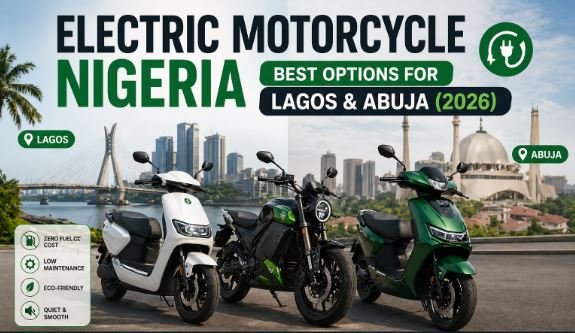
Best Electric Motorcycles for Lagos (2026)
Lagos is a different beast. Flooding on streets like Oshodi–Apapa, pothole-heavy roads from Ojuelegba to Mile 2, and the density of traffic near CMS and Marina mean you need a bike with good ground clearance, robust waterproofing, and a motor that handles constant low-speed torque without overheating.
1. Spiro Ride (Best Overall for Commercial Use)
Spiro is the name everyone keeps coming back to in West African e-mobility circles, and it earns that reputation. Their bikes are designed from the ground up for African roads — not retrofitted from a Chinese factory template. The battery-swap model is the real play here: instead of waiting hours to charge, riders swap a depleted battery for a full one at a Spiro station in under three minutes.
Key specs:
- Range: 80–100km per charge (real-world, Lagos conditions)
- Top speed: 60–70 km/h
- Ground clearance: adequate for most Lagos roads
- Business model: Pay-per-swap (no upfront battery cost)
- Availability: Expanding across Lagos and Southwest Nigeria
Best for: Commercial riders, okada operators, last-mile delivery fleets
Watch out for: Swap station coverage is still growing — check if your route has coverage before committing
2. Vmoto Super Soco TC (Best for Private Riders in Lagos)
Super Soco’s TC model has a proper urban feel without the toy-like quality of cheaper Chinese imports. It handles Lagos pothole reality better than most in its price range, and the removable battery means you charge at home without hunting for a swap station.
Key specs:
- Range: 70–90km per charge
- Top speed: 80 km/h
- Battery: 60V removable lithium pack
- IP rating: IP67 (good waterproofing for Lagos floods)
- Price in Nigeria: ₦1.8M–₦2.4M (varies by vendor/import duty)
Best for: Private commuters, gig delivery riders who own their bike
Watch out for: Spare parts availability — source from a vendor who has stock in-country
3. Baobab Electric Moto (Best Budget Entry Point)
Baobab targets the African market specifically with a lower price point and a service network being built across Nigeria, Ghana, and Kenya. Build quality is honest — not premium — but for a first electric motorcycle that doesn’t break the bank, it’s a serious option.
Key specs:
- Range: 60–80km per charge
- Top speed: 65 km/h
- Price range: ₦900,000–₦1.3M
- Warranty: 1-year frame, 18-month battery warranty
Best for: Budget-conscious buyers, rural-to-urban commuters
Watch out for: Charging time is longer (4–5 hours) than swap-model alternatives
Best Electric Motorcycles for Abuja (2026)
Abuja’s road network is a different story. Wider lanes, better tarmac on most of the main routes, and longer distances between districts mean range matters more. Wuse to Maitama is fine; Wuse to Kubwa on a single charge is the real test. You also have a slightly higher-income buyer base, which means premium models with better build quality find a market here.
1. Qlink Alpha E (Best Overall for Abuja)
Qlink has been in the Nigerian market long enough to have a real service network, and their Alpha E brings electric to a trusted local name. The range numbers hold up reasonably well on Abuja’s better roads, and warranty claims don’t require international shipping.
Key specs:
- Range: 100–120km per charge (Abuja road conditions)
- Top speed: 90 km/h
- Charging time: 3–4 hours (standard outlet)
- Price: ₦1.5M–₦2.1M
- Service: Qlink dealer network across FCT
Best for: Abuja-based commuters, government/corporate fleet use
Watch out for: Highway range drops significantly with aggressive riding
2. Zero Motorcycles SR/F (Best Premium Option)
Yes, this is expensive in Nigerian naira terms — we’re talking ₦8M–₦12M at current import rates. But for buyers in Abuja who want a proper performance electric motorcycle and can access charging at home or at work, the Zero SR/F is genuinely outstanding. It’s the bike that makes converts of petrol-head skeptics.
Key specs:
- Range: 200+ km (city conditions)
- Top speed: 200 km/h
- Motor: 110 hp peak
- Charging: Level 2 compatible (3.3 kWh–12.6 kWh onboard charger)
- App connectivity: Full telemetry via Zero app
Best for: Premium buyers, enthusiasts, expats with access to USD
Watch out for: Import duties, limited local service support — this is strictly for self-sufficient owners
3. Roam Air (Best for Tech-Forward Abuja Buyers)
Roam is a Kenyan-built electric motorcycle that’s been making noise across East Africa and is beginning to appear in FCT through distributors. The connected features — GPS tracking, remote diagnostics, over-the-air updates — put it closer to a tech product than a traditional okada.
Key specs:
- Range: 80–110km
- Top speed: 90 km/h
- Connectivity: 4G, GPS, OTA updates
- Price: ₦1.6M–₦2.2M
Best for: Tech-aware buyers, small fleet operators who want data
Watch out for: After-sales support still thin in Nigeria — verify distributor terms
What to Check Before Buying an Electric Motorcycle in Nigeria
- Battery warranty and replacement cost. Ask what happens at year two when capacity drops. A battery replacement on a cheap import can cost more than the bike’s current resale value.
- Charging infrastructure on your route. If you’re doing daily Lagos–Ibadan or Abuja–Kaduna runs, home charging isn’t enough. Check swap station coverage or Level 2 charger availability.
- Spare parts in-country. If your brake pads, controller, or display unit has to ship from Shenzhen, you could be off the road for weeks.
- IP rating and flood resistance. Lagos buyers especially: an IP55 or lower rating on a road that floods to ankle depth is a risk. Minimum IP67 for serious all-season use.
The Honest Assessment
Electric motorcycles in Nigeria aren’t a niche curiosity anymore. For commercial riders, the fuel savings math works clearly in favour of switching. For private commuters in Lagos and Abuja, the question is more nuanced — range anxiety and charging infrastructure are real concerns that a ₦2M bike purchase won’t automatically solve.
The brands building specifically for African roads — Spiro, Roam, Baobab, Qlink — are worth prioritising over cheap, unmarked imports that look similar but come with zero warranty support. The price difference usually pays for itself in avoided repair bills within 12–18 months.
Nigeria’s electric motorcycle moment is here. The infrastructure is catching up. The question now is which riders get on board early and build their advantage — and which ones wait and watch others pocket the fuel savings.
Frequently Asked Questions
Are electric motorcycles legal in Nigeria?
Yes. Electric motorcycles are legal in Nigeria and subject to the same registration and licensing requirements as petrol bikes. Lagos State’s okada ban applies to certain routes regardless of engine type — electric bikes are not exempt from those route restrictions.
How much does it cost to charge an electric motorcycle in Nigeria?
On a standard residential tariff (Band C–D), charging a 3–5 kWh battery pack costs approximately ₦900–₦2,500. Riders with solar home systems often report charging costs under ₦500 per cycle.
What is the best electric motorcycle for okada business in Lagos?
The Spiro Ride is currently the strongest option for commercial okada use in Lagos, specifically because of its battery-swap model. Riders don’t need to stop for 3–4 hours to recharge — they swap in under three minutes and keep earning.
Can electric motorcycles handle Nigerian roads?
Models built for African road conditions — specifically Spiro, Baobab, and Roam — handle Nigerian potholes and flooding better than most. Generic Chinese imports with no African market engineering tend to struggle with sustained low-speed torque and waterproofing on Lagos roads.
Where can I buy electric motorcycles in Lagos or Abuja?
Spiro has direct operations in Lagos. Qlink has dealers across FCT. Vmoto Super Soco and Roam are available through select EV distributors — always verify the distributor carries in-country spare parts before purchasing.
Related EV News
- Electric Car vs Petrol: How Much Can You Save in Nigeria?
- How Long Does It Really Take to Charge an Electric Car?
- Electric Vehicles in Africa: The Full 2026 State of the Market
- Chery Plans to Enter Nigeria’s Commercial Vehicle Market After Passenger Car Growth
- Roam Electric Orders Double as Kenya Fuel Prices Breach 200 Shillings Per Litre