France has quietly become one of the most interesting places to watch in the EV market. While Germany floods dealerships with premium saloons and Korea keeps pushing efficiency records, French automakers are doing something different — they’re making electric cars that people actually want to look at. The Renault 5 brought back a legend. The Citroën e-C3 made an EV under €25,000 feel plausible. The Peugeot e-308 proved a family hatchback doesn’t have to be boring.
Here’s every French electric hatchback worth knowing about in 2026, what each one is actually good at, and where they fall short.
1. Renault 5 E-Tech — The Best All-Rounder
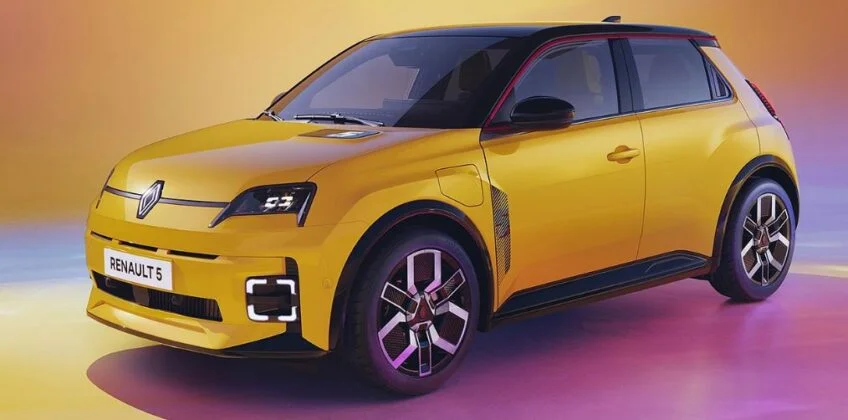
The Renault 5 E-Tech is the car that reminded people French EVs can have personality. It’s compact, it’s cheeky, and it pulls off retro styling without feeling like a costume. Available with a 40 kWh or 52 kWh battery, range sits between 300 km and 410 km WLTP — solid numbers for its segment. The 150 hp motor makes it genuinely fun to drive, not just adequate.
It’s not perfect. The interior quality is a step below what you’d find in a Volkswagen ID.3 at a similar price. But the Renault 5 doesn’t need to beat the ID.3 — it needs to make you smile when you see it in a car park. It does that.
| Spec | Details |
|---|---|
| Battery Options | 40 kWh / 52 kWh |
| WLTP Range | Up to 410 km |
| Power | 90 hp / 150 hp |
| Charging (DC) | Up to 100 kW |
| Starting Price | From ~€25,000 |
2. Renault 4 E-Tech — The Comeback Nobody Saw Coming
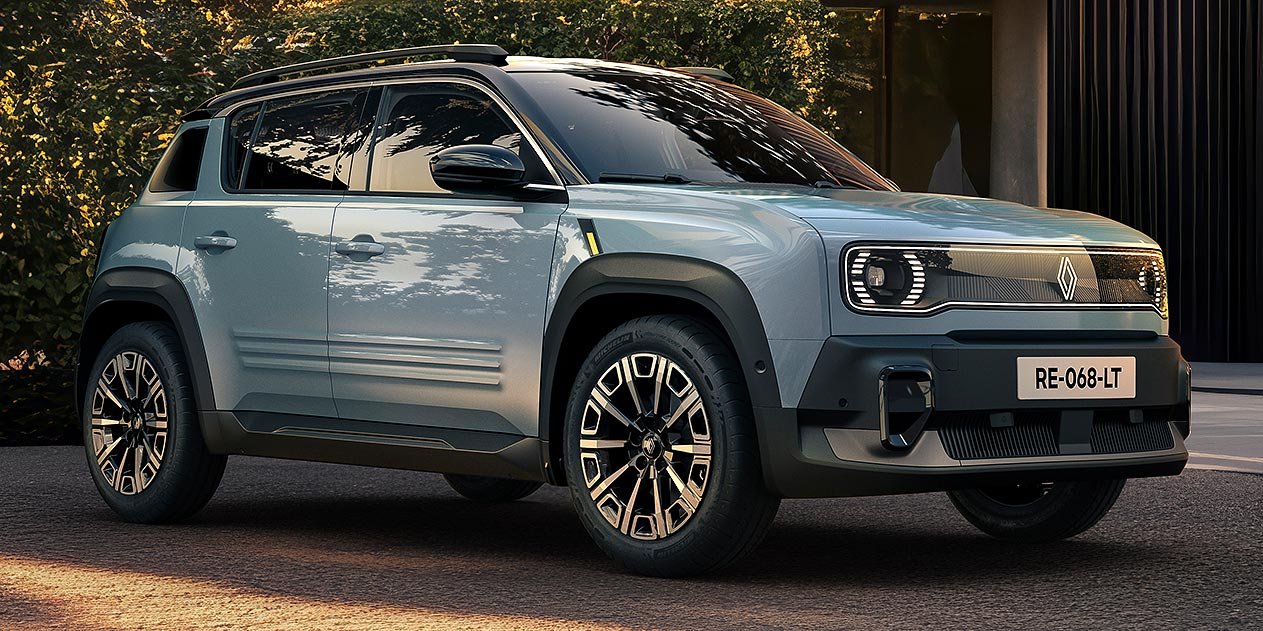
The Renault 4 was dead for 30 years. Now it’s back, electric, and it might be the most talked-about French car since the original. Built on the same CMF-BEV platform as the Renault 5, the 4 E-Tech stretches things out slightly — more boot space, a higher seating position, and a slightly softer ride that makes it feel more mature. The 52 kWh battery returns up to 400 km WLTP, and 100 kW DC charging keeps stops reasonably short.
Where it beats its sibling is practicality. You get 420 litres of boot space versus the Renault 5’s 326 litres — a meaningful difference if you’re using this as a daily family car. The design is broader and less retro-cute, but it wears the 4’s heritage well without leaning too hard on nostalgia.
| Spec | Details |
|---|---|
| Battery | 40 kWh / 52 kWh |
| WLTP Range | Up to 400 km |
| Power | 90 hp / 150 hp |
| Boot Space | 420 litres |
| Starting Price | From ~€28,000 |
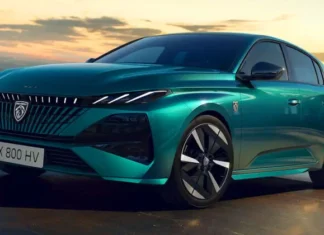
3. Peugeot e-308 — The Grown-Up Option
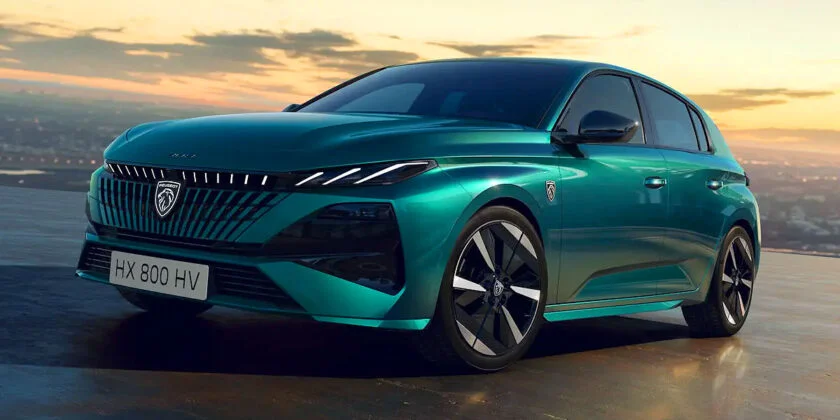
If the Renault 5 is the car for people who want to be seen, the Peugeot e-308 is for people who want to feel good without advertising it. It’s the most premium entry on this list — sharper interior design, Peugeot’s polarising i-Cockpit layout, and a 54 kWh battery pushing up to 410 km WLTP. The 156 hp single motor is quietly capable; this isn’t a performance car, but it never feels underpowered.
The trade-off is price. The e-308 sits noticeably higher than the Renault twins, and you’ll feel it at the configurator. A well-specced GT trim can push past €45,000, which puts it in a different conversation entirely. Whether the premium is justified depends on how much the cabin quality and badge matter to you — and for some buyers, they matter a lot.
| Spec | Details |
|---|---|
| Battery | 54 kWh |
| WLTP Range | Up to 410 km |
| Power | 156 hp |
| Charging (DC) | Up to 100 kW |
| Starting Price | From ~€37,000 |
4. Citroën e-C4 — Comfort Over Everything
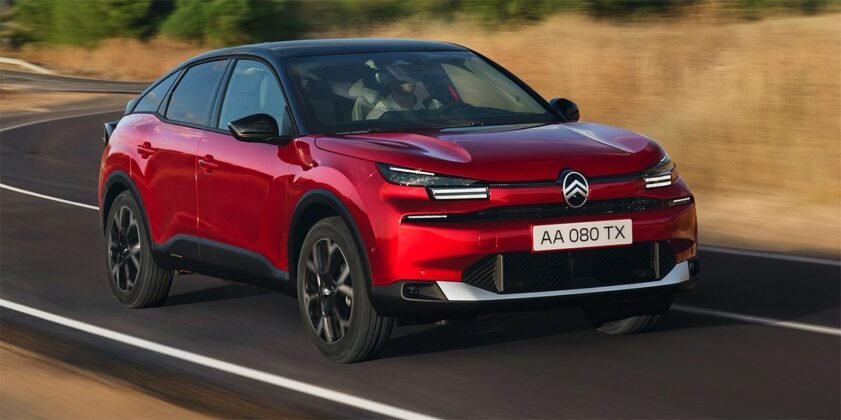
Citroën has always had a different philosophy from Renault and Peugeot — softer, more relaxed, less interested in driving dynamics. The e-C4 is a perfect expression of that. The Progressive Hydraulic Cushion suspension absorbs road imperfections better than most EVs in this price range, and the raised ride height gives it a faint crossover feel without going full SUV. The 54 kWh battery delivers around 360 km WLTP, and the 136 hp motor is fine for the kind of driving the e-C4 was built for.
It’s not sporty. The steering is vague, the i-Cockpit equivalent is less polished than Peugeot’s, and the boot at 380 litres is smaller than it looks. But if long motorway comfort is the priority, it does that job well — and there’s a You trim that undercuts the higher trims significantly.
| Spec | Details |
|---|---|
| Battery | 54 kWh |
| WLTP Range | Up to 360 km |
| Power | 136 hp |
| Boot Space | 380 litres |
| Starting Price | From ~€35,000 |
5. Citroën e-C3 — The Affordable One That Actually Works
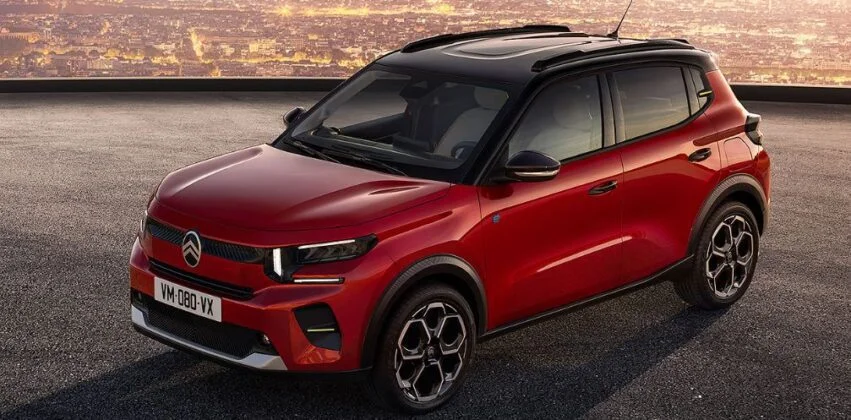
Sub-€25,000 EVs have a reputation for compromise. The e-C3 mostly avoids the worst of it. With a 44 kWh battery and up to 320 km WLTP, it’s not going to win any range contests — but city-to-city driving is realistic. The 113 hp motor won’t excite anyone, but for urban use and light suburban commuting, it’s enough. Citroën also kept the interior simple rather than cheap-feeling, which matters when you’re trying to compete at this price point.
The catch: AC charging is capped at 7 kW on the base trim, and DC fast charging isn’t available on the cheapest variant. If overnight home charging is your routine, that’s fine. If you rely on public infrastructure, it becomes a friction point quickly. Pick the trim carefully.
| Spec | Details |
|---|---|
| Battery | 44 kWh |
| WLTP Range | Up to 320 km |
| Power | 113 hp |
| DC Charging | Available on higher trims |
| Starting Price | From ~€23,300 |
6. Renault Twingo Electric — The City Specialist
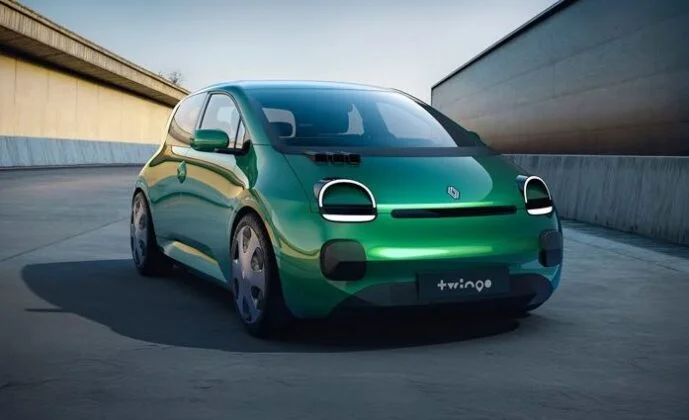
The Twingo Electric is the outlier on this list. It’s not a family car, it doesn’t do long motorway runs, and its 190 km real-world range means you’re not going anywhere far on a single charge. What it is, is the cheapest way to drive electrically in a major European city — tight turning circle, rear-wheel drive (unusual at this price), and dimensions that make Parisian parking genuinely easy. A new generation is in development, which should address the range and charging limitations that hold the current car back.
If your commute is under 60 km each way and you have home charging, the Twingo Electric makes a case for itself. For anything beyond that, you’ll hit its limits regularly.
| Spec | Details |
|---|---|
| Battery | 21.4 kWh |
| WLTP Range | Up to 190 km |
| Power | 82 hp |
| Drive Layout | Rear-wheel drive |
| Starting Price | From ~€20,000 |
French Electric Hatchbacks 2025: Head-to-Head Comparison
| Model | Battery | Range (WLTP) | Power | Starting Price | Best For |
|---|---|---|---|---|---|
| Renault 5 E-Tech | 40/52 kWh | 410 km | 150 hp | ~€25,000 | Best all-round pick |
| Renault 4 E-Tech | 40/52 kWh | 400 km | 150 hp | ~€28,000 | Families needing more boot |
| Peugeot e-308 | 54 kWh | 410 km | 156 hp | ~€37,000 | Premium cabin feel |
| Citroën e-C4 | 54 kWh | 360 km | 136 hp | ~€35,000 | Motorway comfort |
| Citroën e-C3 | 44 kWh | 320 km | 113 hp | ~€23,300 | Budget-conscious buyers |
| Renault Twingo Electric | 21.4 kWh | 190 km | 82 hp | ~€20,000 | Pure city driving |
Which French Electric Hatchback Should You Buy?
For most buyers, the Renault 5 E-Tech is the answer. The range is solid, the price is honest, and it’s genuinely enjoyable to own — something that can’t be said for every EV in this bracket. If you need a bit more room, the Renault 4 E-Tech solves that without giving much up.
The Peugeot e-308 is the right choice if the cabin experience matters as much as the drivetrain, but you need to go in with eyes open about the price. The Citroën e-C4 earns its place for buyers who spend most of their driving time on motorways and want comfort as the default setting.
On the budget end, the Citroën e-C3 is more capable than it looks on paper — just check the charging spec before committing. And the Renault Twingo Electric remains one of the few city EVs that’s genuinely designed around urban use rather than scaled down from something bigger.
France’s EV lineup is more cohesive than it’s been in years. Each car here has a clear identity, which is more than most EV ranges can claim right now.
Related EV Clusters
- Volkswagen EV Comparisons 2026: Every Model vs the Competition
- Togg EVs Compared 2026: Turkey’s Electric Cars vs Global Rivals
- Voyah EV Guide 2026: Full Lineup vs Every Rival
- Electric Sedans $30K–$50K: Every 2026 Model Compared
- Kia Electric Lineup 2026: Full Model Comparison