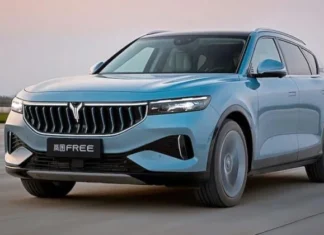
Voyah is one of the more interesting brands to watch in the Chinese EV space right now. Built under Dongfeng Motor — one of China’s largest state-backed automakers — it sits in the premium tier alongside names like Zeekr and Aion, but with a quieter international footprint. The lineup runs two core models: the Voyah Free, a mid-size SUV currently sold as an extended-range electric (EREV), and the Voyah Dream, a full-size luxury electric MPV. Both enter African markets through grey-market import channels and are gaining traction in Nigeria, Ghana, and Kenya among buyers looking for alternatives to established European and American premium EVs.
This page brings together every Voyah comparison published on EV Car Latest. Each matchup covers real specs, African market pricing estimates in NGN, KES, ZAR and Global Currencies, charging infrastructure context, and a direct verdict on who each car suits best. Pick the matchup relevant to your shortlist and read the full breakdown.
All Voyah Comparisons on This Site
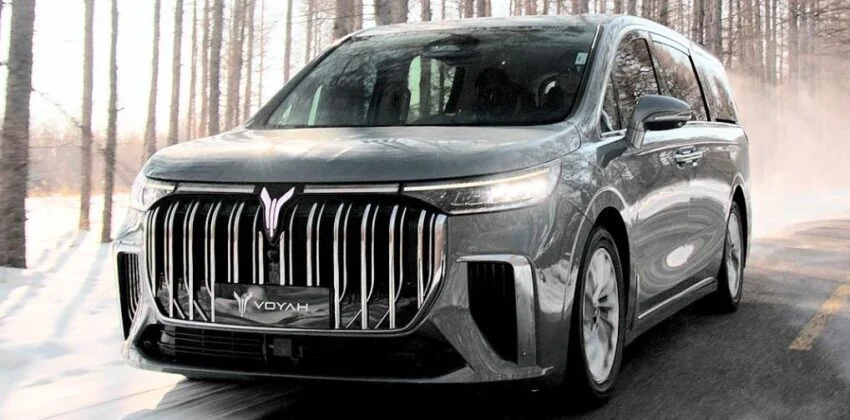
1. Maxus Mifa 9 vs Voyah Dream — Two Chinese Electric MPVs, One Clear Winner?
Segment: 7-seat luxury electric MPV Key question: Between SAIC’s Mifa 9 and Dongfeng’s Dream, which delivers better value for African families and fleet buyers?
Both are built for executive or family transport, both carry seven seats on a 3,200 mm wheelbase, and both arrive in Africa via grey-market channels. But they are not equally matched. The Voyah Dream runs a larger 108.7 kWh NMC battery, dual-motor AWD producing 320 kW, and CLTC range of 650 km — along with Huawei’s Qian Kun ADS 3.0 driver assistance. The Mifa 9 is a simpler, lighter, front-wheel-drive machine with a 90 kWh pack and WLTP-rated 440 km — more affordable, but noticeably less powerful and less tech-heavy.
At a Glance
| Maxus Mifa 9 | Voyah Dream EV (2025) | |
|---|---|---|
| Battery | 90 kWh NMC | 108.7 kWh NMC |
| Range (CLTC) | 540 km | 650 km |
| Range (WLTP) | 440 km | ~605 km (est.) |
| Motor / Drive | FWD, 180 kW | AWD, 320 kW |
| 0–100 km/h | ~8.5 sec (est.) | 5.9 sec |
| China MSRP | USD 35,450–45,220 | USD 49,150–63,200 |
| Nigeria Landed (est.) | ₦85M–₦110M | ₦120M–₦155M |
WLTP figure for Voyah Dream is estimated from CLTC conversion. Official WLTP certification for African markets is unconfirmed.
The Mifa 9 makes sense if budget is the primary constraint. The Dream justifies its premium with significantly more range, power, and technology. For Nigerian buyers weighing long-distance inter-city runs or corporate fleet use, the Dream’s battery cushion is more practical despite the higher price.
👉 Read the full Maxus Mifa 9 vs Voyah Dream comparison →
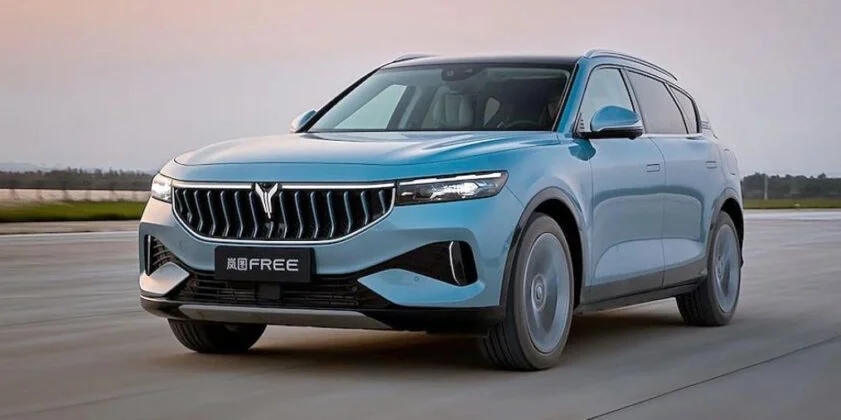
2. Skoda Elroq vs Voyah Free — European Compact SUV Against a Chinese EREV
Segment: Mid-size electric / extended-range SUV Key question: Does Skoda’s newest EV hold up against Voyah’s more affordable but less mainstream Free?
This matchup crosses continents. The Skoda Elroq is a mainstream European compact EV built on Volkswagen Group’s MEB platform — tight, efficient, well-supported in Europe, and now trickling into South African conversations via formal and grey channels. The Voyah Free 2025 is a Chinese EREV: it pairs a 1.5-litre range extender with a 43 kWh battery to deliver a combined CLTC range of 1,357 km, with 196 km on pure electric. That total range figure sounds remarkable until you account for the petrol dependency beyond the battery window.
At a Glance
| Skoda Elroq 85 | Voyah Free (2025 EREV) | |
|---|---|---|
| Battery | 82 kWh NMC (77 kWh net) | 43 kWh LFP |
| Range (WLTP) | 574 km (pure EV) | 196 km EV / 1,357 km combined (CLTC) |
| Motor / Drive | RWD, 210 kW | AWD, 350 kW |
| 0–100 km/h | 6.6 sec | 4.9 sec |
| Fast Charging | Up to 135 kW DC (10–80% in 28 min) | Unconfirmed for export markets |
| Pricing (est.) | USD 47,000–52,000 (Europe) | USD 32,330–41,160 (China MSRP) |
| Nigeria Landed (est.) | ₦115M–₦130M | ₦78M–₦100M |
Voyah Free DC fast-charging specifications for grey-market exports to Africa are unconfirmed. Skoda Elroq is not formally sold in Nigeria or Kenya as of early 2026.
The Elroq wins on charging infrastructure compatibility in South Africa and offers a simpler, verified EV experience. The Voyah Free undercuts it on price and obliterates it on total range — but the EREV powertrain means you are still buying petrol dependency into the equation, which matters in fuel-scarce contexts.
👉 Read the full Skoda Elroq vs Voyah Free comparison →
3. Voyah Free vs Audi Q6 e-tron — Chinese EREV Takes on German Premium Electric
Segment: Mid-size premium electric SUV Key question: Is the Audi Q6 e-tron’s brand and technology worth paying nearly double the Voyah Free’s price?
This is the most lopsided price matchup on this page — and deliberately so, because it is a comparison many African premium SUV buyers are quietly making. The Voyah Free EREV starts at roughly USD 32,000 in China and lands in Nigeria around ₦78M–₦100M via grey market. The Audi Q6 e-tron starts at USD 63,800 in the US and EUR 68,800 in Europe, landing in Nigeria comfortably above ₦160M through grey channels.
What do you get for that premium? A purpose-built 800V pure EV platform (PPE, co-developed with Porsche), a 100 kWh battery with up to 641 km WLTP in the RWD performance variant, 270 kW DC fast charging (10–80% in 21 minutes), and the full Audi interior and safety stack. The Q6 e-tron Quattro AWD produces 422 hp with 307 miles EPA range; the SQ6 bumps to 483 hp.
At a Glance
| Voyah Free (2025 EREV) | Audi Q6 e-tron Quattro | |
|---|---|---|
| Powertrain | EREV (1.5T + 350 kW electric) | Pure BEV, dual-motor AWD |
| Battery | 43 kWh LFP | 100 kWh NMC (94.4 kWh usable) |
| EV Range | 196 km CLTC | 494 km WLTP (up to 641 km, RWD) |
| 0–100 km/h | 4.9 sec | ~5.0 sec |
| DC Fast Charging | Unconfirmed for export | 270 kW, 10–80% in 21 min |
| China/US MSRP | USD 32,330–41,160 | USD 65,095–74,195 |
| Nigeria Landed (est.) | ₦78M–₦100M | ₦160M–₦195M |
The Audi is the better pure EV by most objective measures — faster charging, longer pure-electric range, a more mature driver assistance system, and stronger residual value prospects. The Voyah Free wins only on price and on total range if you are comfortable using its petrol range extender. For buyers near a charging infrastructure gap, the EREV argument has merit. For buyers who want a credible, long-range pure EV in a luxury SUV body, the Q6 e-tron has no real weakness beyond price.
👉 Read the full Voyah Free vs Audi Q6 e-tron comparison →
4. Voyah Free vs Lucid Gravity — Affordable Chinese EREV vs Ultra-Premium American SUV
Segment: Mid-size SUV vs large luxury 3-row electric SUV Key question: These two are not natural rivals, but African buyers researching long-range EVs often encounter both. Here is where they differ.
The Lucid Gravity is currently the longest-range production electric SUV you can buy — 450 miles EPA-rated in Grand Touring trim with 20/21-inch wheels. It uses a 123 kWh battery pack, dual-motor AWD producing 828 hp, and a 926V electrical architecture that enables 350 kW fast charging. It seats up to seven adults and, in Grand Touring form, costs USD 94,900 before destination charges. A new Touring trim entered the market in late 2025 at USD 79,900 with 337 miles EPA range and 560 hp.
The Voyah Free EREV costs less than half of that. It is a mid-size 5-seat SUV, not a 3-row luxury flagship, and its 1,357 km CLTC combined range is achievable only by running the petrol range extender. Pure EV range is 196 km CLTC.
At a Glance
| Voyah Free (2025 EREV) | Lucid Gravity Grand Touring | |
|---|---|---|
| Seats | 5 | Up to 7 |
| Powertrain | EREV | Pure BEV, dual-motor AWD |
| Battery | 43 kWh LFP | 123 kWh |
| EV Range | 196 km CLTC (pure EV) | 724 km (450 miles EPA) |
| Peak Power | 350 kW | 617 kW (828 hp) |
| 0–100 km/h | 4.9 sec | ~3.5 sec (est.) |
| US MSRP | USD 32,330–41,160 (China) | USD 94,900 |
| Nigeria Landed (est.) | ₦78M–₦100M | ₦235M–₦270M (est.) |
Lucid Gravity is a US-market vehicle. Nigerian and Kenyan landed cost is a rough estimate via grey-market US export; formal availability in Africa is unconfirmed.
There is no scenario where the Voyah Free and the Lucid Gravity are true alternatives. What this comparison does is clarify a spending question: buyers with ₦100M+ budgets need to know what each price bracket actually delivers. The Gravity is a range and technology statement at a price that few African buyers will pay today. The Voyah Free is a practical, value-driven EREV for buyers who want a capable SUV without the premium brand tax.
👉 Read the full Voyah Free vs Lucid Gravity comparison →
5. Voyah Dream vs Zeekr 009 — China’s Two Premium Electric MPVs Go Head-to-Head
Segment: Full-size luxury electric MPV Key question: The Dream and the 009 are the two most serious Chinese electric people movers. Which one delivers more for the money?
Both the Voyah Dream and the Zeekr 009 are built to challenge the Mercedes EQV and the Lexus LM for the executive MPV space — and both do it at a fraction of the price. But they take different approaches to performance and packaging.
The Zeekr 009 (2025 Deluxe Two-Wheel-Drive, seven-seat) achieves 604 km WLTP from a 116 kWh battery. The AWD version — more commonly seen in grey-market exports — runs dual motors producing 450 kW and 693 Nm, hitting 100 km/h in 4.5 seconds. It uses CATL’s Qilin cell-to-pack technology, a 15.05-inch OLED central screen, 30-speaker Yamaha audio, and optional in-cabin features that lean toward corporate chauffeur use. In Australia, it is priced at AUD 135,900 for the 7-seat AWD variant.
The Voyah Dream EV 2025 runs a 108.7 kWh NMC battery, dual-motor AWD at 320 kW and 620 Nm, CLTC range of 650 km, and Huawei Qian Kun ADS 3.0 for driver assistance. China MSRP runs from CNY 349,900 to CNY 449,900 (USD 49,150–63,200).
At a Glance
| Voyah Dream EV (2025) | Zeekr 009 AWD | |
|---|---|---|
| Battery | 108.7 kWh NMC | 116 kWh NMC (CATL Qilin) |
| Range (WLTP) | ~605 km (est.) | 582 km (AWD) / 604 km (2WD) |
| Range (CLTC) | 650 km | ~820 km (est.) |
| Motor / Drive | AWD, 320 kW | AWD, 450 kW |
| Torque | 620 Nm | 693 Nm |
| 0–100 km/h | 5.9 sec | 4.5 sec |
| ADAS | Huawei ADS 3.0 | Zeekr AD suite |
| China MSRP | USD 49,150–63,200 | USD 55,000–75,000 (est. export) |
| Nigeria Landed (est.) | ₦120M–₦155M | ₦135M–₦185M |
Voyah Dream WLTP is estimated from CLTC conversion. Zeekr 009 export pricing for Nigeria/Kenya is unconfirmed; estimate based on grey-market intermediary quotes.
The Zeekr 009 holds a clear edge in outright performance and audio-visual luxury. The Voyah Dream counters with Huawei’s more mature ADAS and a lower entry price. For buyers who prioritise the chauffeur experience and in-cabin tech, the 009 is the pick. For buyers who want a technology-forward, well-rounded MPV with strong driver assistance, the Dream is the safer grey-market bet.
👉 Read the full Voyah Dream vs Zeekr 009 comparison →
6. Voyah Dream vs Voyah Free — Same Brand, Very Different Cars
Segment: Within-brand comparison Key question: If you are set on Voyah, which one makes more sense for an African buyer — the Dream MPV or the Free SUV?
This is the most practical comparison for buyers who have already narrowed their shortlist to the Voyah brand. The Dream and the Free are built on the same ESSA platform by the same company, but they target different buyers almost entirely.
The Voyah Dream EV is a full-size 7-seat luxury MPV — 5,315 mm long, AWD, 650 km CLTC range, 320 kW. It is built for families and corporate transport where passenger comfort takes priority over driving dynamics. The Voyah Free EREV is a mid-size 5-seat SUV — 4,915 mm long, AWD, 196 km pure EV + 1,357 km CLTC combined with the range extender, 350 kW. It is aimed at drivers who want SUV versatility and are less concerned about full EV operation.
At a Glance
| Voyah Dream EV (2025) | Voyah Free (2025 EREV) | |
|---|---|---|
| Body | Full-size MPV | Mid-size SUV |
| Seats | 6 or 7 | 5 |
| Powertrain | Pure BEV | EREV (1.5T + electric) |
| Battery | 108.7 kWh NMC | 43 kWh LFP |
| Range (CLTC) | 650 km | 196 km EV / 1,357 km combined |
| Motor / Drive | AWD, 320 kW | AWD, 350 kW |
| 0–100 km/h | 5.9 sec | 4.9 sec |
| Dimensions | 5,315 × 1,998 × 1,800 mm | 4,915 × 1,960 × 1,645 mm |
| China MSRP | USD 49,150–63,200 | USD 32,330–41,160 |
| Nigeria Landed (est.) | ₦120M–₦155M | ₦78M–₦100M |
The Free is cheaper and faster off the line. The Dream hauls more people in more comfort over a longer pure-electric distance. If you primarily drive alone or with one or two passengers across mixed roads, the Free makes more sense. If you run school runs, airport transfers, or corporate logistics, the Dream is the stronger choice. The price difference — roughly ₦40M–₦55M at Nigerian grey-market rates — is significant enough that most buyers will not find themselves genuinely torn.
👉 Read the full Voyah Dream vs Voyah Free comparison →
Quick Reference: All Voyah Comparisons
| Matchup | Voyah Model | Rival | Segment | Who Wins |
|---|---|---|---|---|
| Maxus Mifa 9 vs Voyah Dream | Dream | Maxus Mifa 9 | Electric MPV | Voyah Dream (range, power, tech) |
| Skoda Elroq vs Voyah Free | Free | Skoda Elroq 85 | Compact/Mid SUV | Depends on EV preference |
| Voyah Free vs Audi Q6 e-tron | Free | Audi Q6 e-tron | Premium SUV | Audi (pure EV); Voyah (value) |
| Voyah Free vs Lucid Gravity | Free | Lucid Gravity | Budget vs Premium | Different segments entirely |
| Voyah Dream vs Zeekr 009 | Dream | Zeekr 009 | Luxury Electric MPV | Zeekr (performance); Voyah (ADAS) |
| Voyah Dream vs Voyah Free | Dream vs Free | Within brand | SUV vs MPV | Depends on use case |
About Voyah: A Quick Brand Note for African Buyers
Voyah (岚图, Lántú) is a premium sub-brand under Dongfeng Motor, launched in 2020. It is not a startup — Dongfeng is part-state-owned and has produced vehicles since the 1960s. Voyah vehicles are built on the ESSA (Electric Smart Secure Architecture) platform and are currently sold primarily in China, with limited grey-market exports reaching Nigeria, Ghana, Kenya, and South Africa.
Neither the Voyah Free nor the Voyah Dream has an authorised dealership network in any sub-Saharan African country as of early 2026. Buyers should factor in spare parts sourcing, over-the-air update limitations outside China, and proprietary Huawei diagnostics when considering total cost of ownership.
All African market pricing is estimated for grey-market import context. Figures are based on China MSRP + freight, port clearing, and agent fee estimates and are subject to change. Neither Voyah, Zeekr, Maxus, Skoda, Audi, nor Lucid has confirmed official distribution in Nigeria or Kenya as of the publication date.
Spec sources: CarNewsChina, Wikipedia, UltimateSpecs, EV Database, manufacturer press releases. WLTP figures for Chinese-market vehicles estimated from CLTC where official WLTP is unavailable — noted in each table.
Related EV Clusters
- Electric Sedans $30K–$50K: Every 2026 Model Compared
- Kia Electric Lineup 2026: Full Model Comparison
- Chinese Electric Hatchbacks 2026: 17 Models From $5K to $30K
- Xpeng EV Guide 2026: Full Lineup vs the Competition
- Luxury Chinese Electric SUVs 2026: $70K–$90K Compared